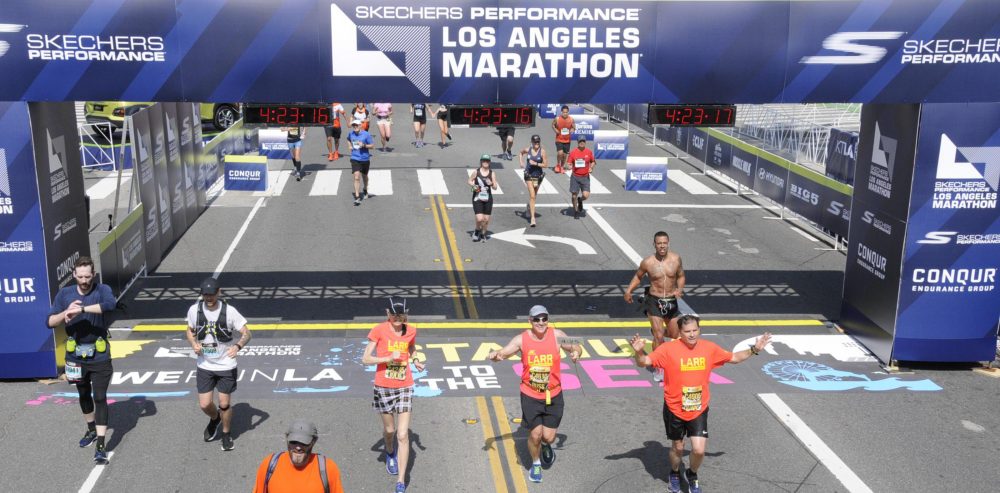
Late September of 2023. I don’t remember the exact date, but it was most likely the 23rd of that month.
Friday night, the day before I began year number seven as a pacer for the LA Marathon. I felt as strong as I ever felt as a runner, having recently completed a trail half marathon in Santa Cruz with around 1,900 feet of elevation gain. Took me about 3 hours and 15 minutes, but good enough to get me third place in the 60-69 age group. I was past all the injuries I had suffered through, including burnout and exhaustion that plagued my 2023 pacing effort back in March of 2023.
The night before my alarm was set to go off at 6:00AM for that first Saturday meetup as a pacer to train a fresh batch of “newbies” on their six month journey to the Los Angeles Marathon in March of this year (2024), I felt something — shift — in my body. Upset stomach, difficulty breathing, a bit of pain in the solar plexus area of my chest. “All those Diet Cokes I’ve been drinking!” I thought. I went to bed, figuring that I would feel better in the morning.
I did… sort of.
Long story short, my friend and fellow pacer Russ was out of town on that Saturday, so it was up to me to lead these new runners on their first official training run (all of 3 miles) on my own.
(Note:; about 2/3 of the runners were friends of mine who had run previous marathons, and who I had trained with all summer. So, not all were “newbies,” but a few were.)
I gave a quick lecture about road etiquette, and let them know that though the run was short, if anyone wanted to get in a few more quick miles afterwards, that I would be game.
We set off. Week #1 of 26 weeks of Saturday training runs leading to the LA Marathon, just six short months away! Except — I couldn’t breathe. Oh, air was coming in and out, but my whole abdomen felt like I swallowed an anvil. A weird heaviness settled in and around my gut and upper chest. After about half a mile, I announced that I had to make a bathroom stop, and told them to turn around at the pier and run back to the starting point, where I would join them.
Then I went into the bathroom and tried to throw up. I couldn’t, but I tried. I did, however, have a “bowel movement” which made me feel much better. “That’s it,” I announced to myself. “I have an ulcer.” The heartburn I experienced while attempting to run back to the place where we started puzzled me, though. I hadn’t felt that particular pain before.
I’m going to make a long story very short here. After consulting with a doctor, and after an abdominal MRI and a treadmill stress test several weeks later (it can take time to schedule tests like this), I was told that I had an arterial blockage. Atherosclerosis.
Cutting it even shorter, the first attempt to stent the artery with an angioplasty failed because the blockage was 100%. I had what is known as a “chronic total occlusion.”
People. Have. Heart attacks. From. This. And they die.
As a runner and a non-smoker, I was lucky in that a few “collateral arteries” formed around the blockage, directing blood to the parts of my heart that likely would have died if I’d had a full heart attack, even if I lived.
I worked with my cardiologist, accepting without question the fistful of daily pills that I began to take, and will likely take for as long as I live. I worried that being sent to cardiac rehab so that I would be able to at least do some exercise while monitored, was my HMO’s and insurance’s way of getting me to accept that I probably wouldn’t be able to run again, despite my cardiologist telling me that a more advanced angioplasty or, if push came to shove, a coronary bypass, would get me running by summer.
In the meantime, I showed up every Saturday morning to greet my team, give them encouragement, and feed them water and snacks at the water stop that I ran for them (and the 300 other runners). This helped so much. It kept me connected not only with my team, but with all the other runners, and the running community at large. But it was bitter sweet. I envied them so much being able to do something that I was told would likely kill me if I did it, according to my cardiologist.
“Have faith in the system,” I reminded myself. And that was tough, considering America’s state of health care at the moment. But I knew my doctors, and I had (and still have) great insurance. I used those two facts to keep my brain from falling into the abyss.
And I did all the things you’re supposed to do when facing a health crisis involving one’s circulatory system: I changed my diet, adding more fruits and vegetables, cut out red meat, and lost five pounds. I need to lose five more.
Within about a year, I will likely be vegan. Maybe not 100%, but who is 100% anything, really?
Fast forward to March of this year (2024). I got the call from my cardiologist’s office. They were going to attempt the stent again. The process, abbreviated as a CTO PCI, is a more complicated stenting process. The surgeon moves the stent _through_ the surface of the artery. Not a hundred percent sure how it was done (I’ll research it and post about the technicalities), but about an hour in, I heard the words “ok, inflate the balloon now,” and my heart “leaped for joy” so forcefully that I wonder if the surgeon detected it.
It took two stents to get through the blockage. The surgeon told me that I was one of the more difficult patients. I laid there nice and quietly, I told him, but he chuckled. “Oh, no. YOU were fine. The SURGERY was difficult!”
The blockage was nearly 3 inches long. But they got it done!
A few days later, on the final Saturday before the marathon, I ran about a mile with my group. Despite my phenomenal lack of shape, I was able to run without any pain _at all_.
I am writing this three months after the fact, partly because part of me is afraid that some other shoe might drop. But I ran three races, two of them trail runs, one of them with 1,700 feet of elevation gain, and one (a road half marathon) with a full blown arrhythmia that lasted for the first hour. No pain, at all! In fact, thanks to all the medication I’m taking, I didn’t feel at all running through an arrhythmia the way I felt at last year’s San Francisco half marathon. In fact, I ran it a half hour faster! (My cardiologist, by the way, is well aware of this, and we are monitoring it)
It’s been three months. I can’t predict the future. Perhaps another blockage will show itself in the next few years. Perhaps with the dietary changes and medications there won’t be another one at all. One can hope.
But I’ve been through this once now, and I know what it is. And I know I can survive it. I will continue to run until that first shovelful of dirt lands on my waxen face.
I will write about the races I ran after the surgery, and my bigger running goals coming up, because I have ’em.
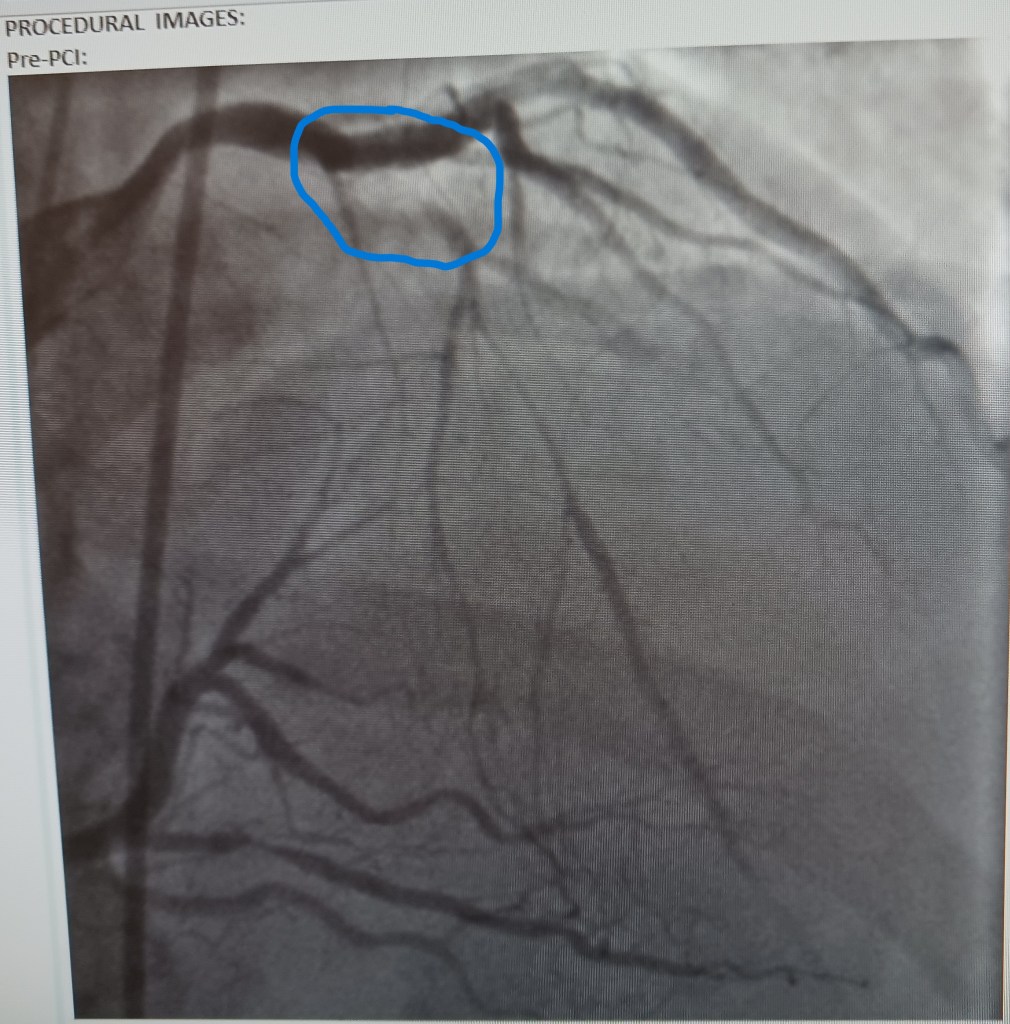
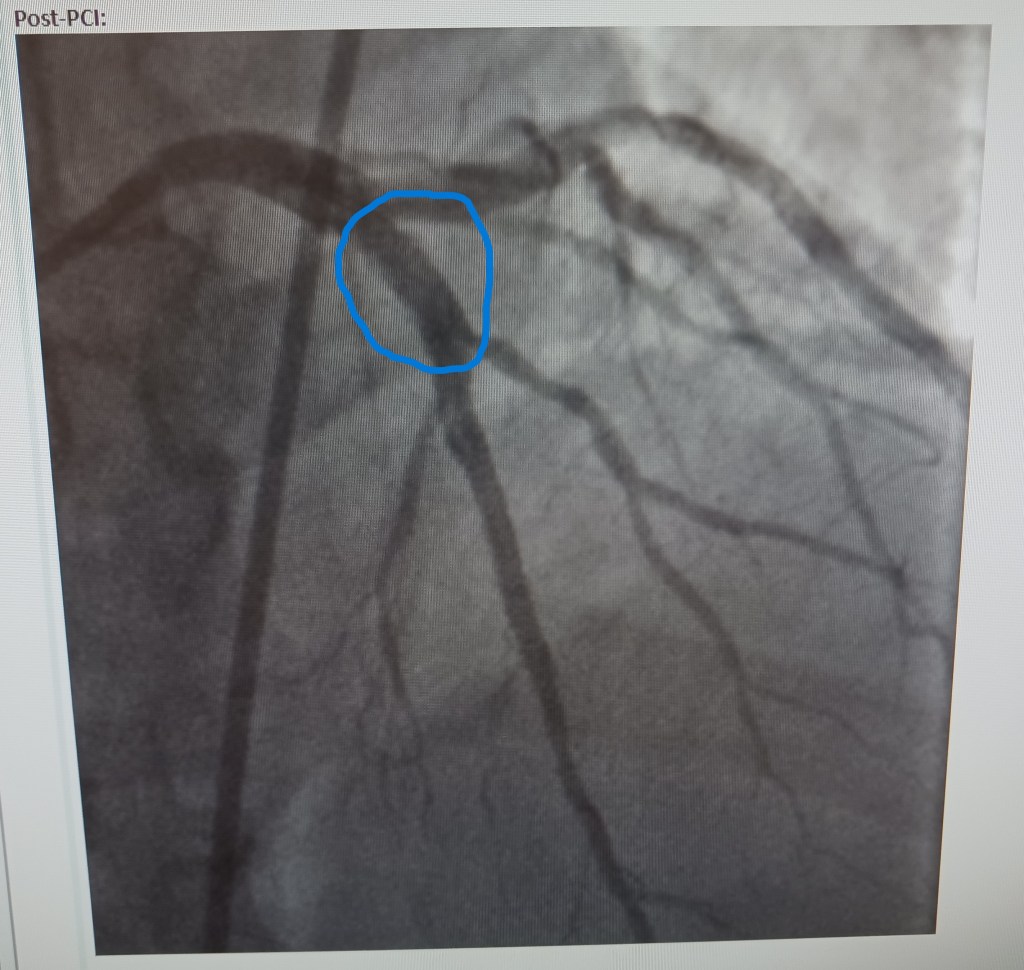
But I will close off today’s entry with a before and after shot of the arteries in my heart. See if you can tell where the blockage was. (Hint: check the blue circle). Once you spot it, you will wonder how the hell I lived through it without something more serious, or fatal, happening to me.
 Quest To Qualify
You must be logged in to post a comment.