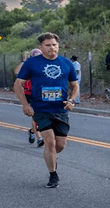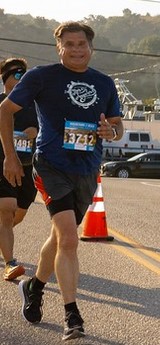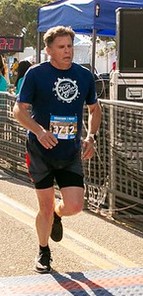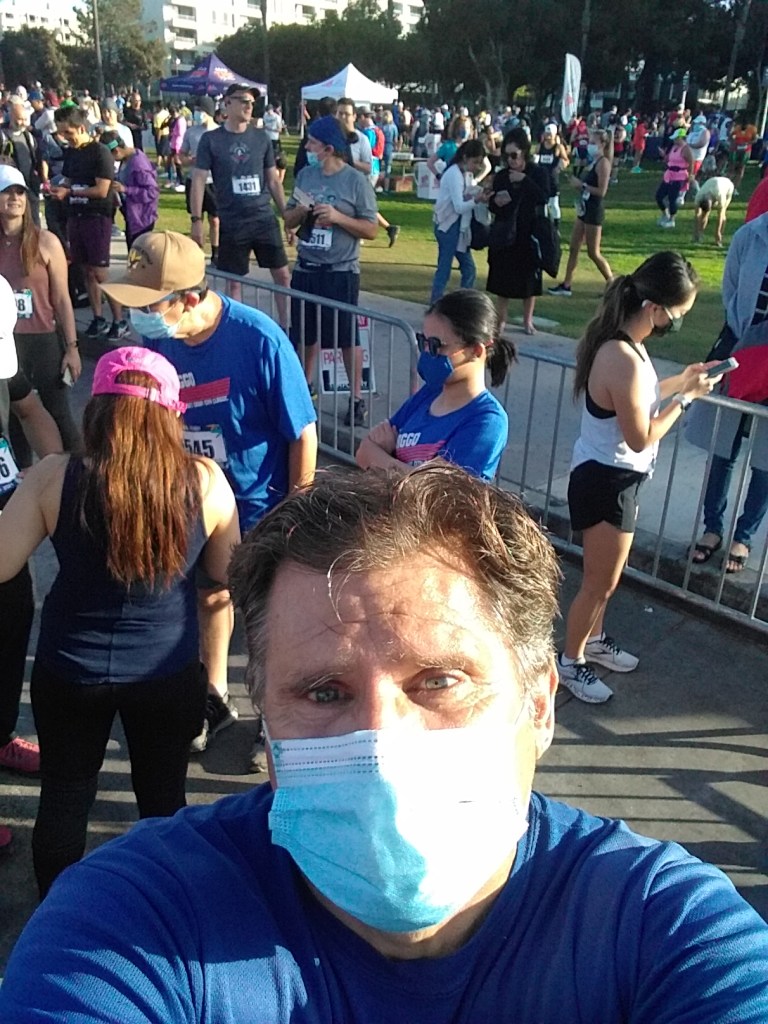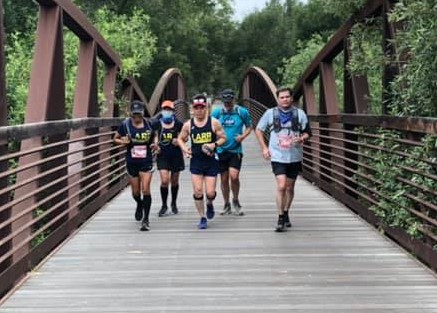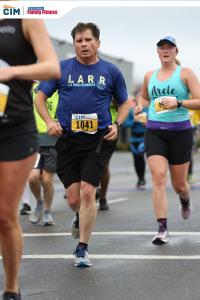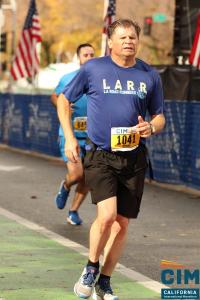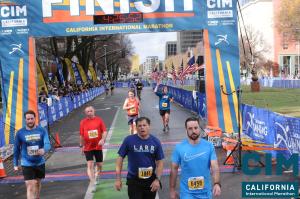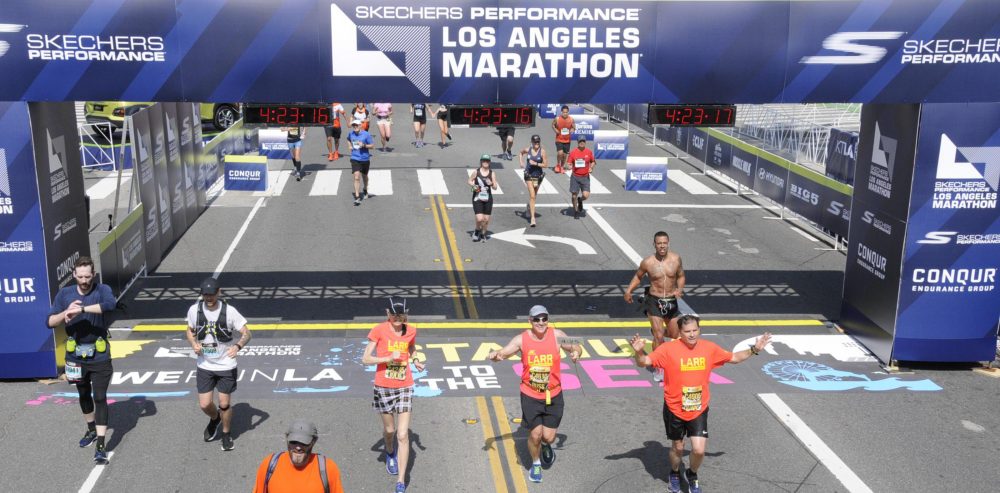
“This is a trail race, not a hike!” I yelled at everyone

April 1st, 2023. Just a mere six months ago. I’ll always remember this day.

THE GREAT RACE OF AGOURA

Exactly one year before, in April of 2022, as runners lined up for the 2022 edition of the Great Race, in beautiful downtown Agoura Hills California, I sat glumly on my bed, nursing a pinched nerve in my back and an unstable torn left quadriceps just above my knee. Just one week earlier, I also sat glumly on my bed, nursing the same injuries, while runners lined up for a small trail race in the west San Fernando Valley. A race that, by the way, no longer exists.

I had registered for both these races months earlier. I was not going to be able to run them.

And a week before THAT, I painfully pedaled my bike to the cheer tent at mile 20 of the LA Marathon where I would watch, glumly, while trying to look cheery, as the training group I had led for six months ran by me, without me trading off the pacing sign with my fellow pacer.

And seven days before THAT — well, let’s just say that if one has not strength trained with vigor, little injuries will build up, painlessly, until one day, say a week before a major marathon you’re supposed to run with people you have spent six months of Saturdays with, getting to know them and run with them, an otherwise normal feeling quadriceps muscle will blow out on you. And if, in your pride and ego, you try to shake it off and run one final workout with the team, you can throw in a pinched sciatic nerve in with it.

It was a long year waiting for this trail race to swing by on my race calendar. And boy, was it worth the wait.

(Well, I DID run New York City, but that was a different entry, wasn’t it?)

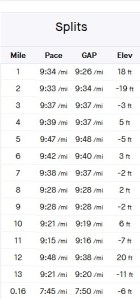
The race began with about two miles of largely downhill running on paved streets (don’t think I didn’t sweat that part of the race! Was my strength training enough?), followed by a glorious nine miles of gentle uphill through the Palo Comado Canyons via the Cheeseboro Canyon trail, up and up, a full thousand feet of elevation gain over those nine miles, until you meet up with civilization again for a final two and a half mile downhill back to the finish. Absolute heaven.

So grateful I had had the patience to recover and focus on strength, mobility, and flexibility! My time sucked at 2:20 for the half, but after all it was a trail run, right?

You wouldn’t know it from the oddest thing I saw out there:

We had a lot of rain this year. The 2023 storms wiped out roads, rerouted creeks and rivers, and turned every tiny streamlet into an abundant water source for pretty much the entire summer.

And runners, who like me had paid a hundred bucks to get out there and run the most beautiful trail race in Southern California… you want to know what they did?

Instead of thrashing their way through the dozen or so creeks that crossed the trail, these people — ugh. It enrages me to say it.

They stood in line, single file, and tiptoed over whatever rock path they could find to MAKE SURE THEIR G-D- M-F- $200 AND CHANGE *****TRAIL SHOES***** DIDN’T GET WET!

I’m not an angry person, but this situation even now makes my gorge buoyant. At least a dozen times, I committed the unpardonable sin (at least to me on calmer days) of cutting the line, running past them, apologies blasting from my mouth like expletives, thrashing through the creek like you’re supposed to, and shouting “THIS IS A TRAIL RACE, M-F-ERS!” before speeding on.

I’m certain that there were at least three instances where I deserved a punch in the mouth:

A narrow trail that snaked its way across a steep hillside with room for a single file line and a few cents’ change (which I took advantage of, nearly falling down the hill myself). A narrow gorge that required people to climb it single file, unless you wanted to boulder hop like I did, well within punching distance of whatever hothead thought I was interrupting his or her peaceful stroll. And the last, when near the end of all the crossings with my patience at its end, I shouted out the above “THIS IS A TRAIL RACE” epithet at the top of my lungs. I shocked myself at the volume.

But I’m a runner, right? Boy did that ever give me the motivation to drive my pace well into zone 4 and sprint the hell outta there.

Later, at the finishing chute, I spoke to an old vet who gave me some great advice: (A)-get to know the trail so you can anticipate such setbacks, and (B) RUN THE FIRST TWO MILES AS FAST AS YOU CAN to the trailhead to beat all the dimwitted strolling chuds.

A great life lesson, don’t you think?
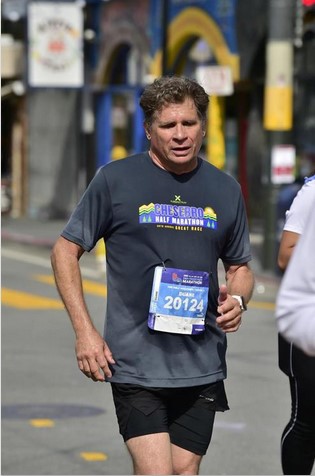
This is what it’s like to run a half marathon with an arrhythmia

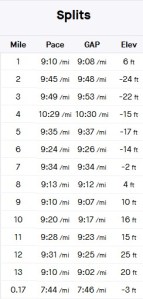
How did my San Francisco Half go, you asked?

I’ve run countless races from the 5k to the marathon.

But this was the very first race, ever, that I very nearly DNF’d.

And no, not because of the hills, which were plenty. 950 feet of elevation gain and loss is no joke.

I’ve slacked a bit from formal training, though that is changing now with the LA Marathon and later races on next year’s calendar.

San Francisco’s traffic is abysmal, and I left my cell phone, _again_, this time at the Expo (I quickly realized my error and found it within about 5 minutes, so that wasn’t the issue).

The issue? A fib. Around 2AM, I woke up to my heart flip-flopping around like a gerbil on holiday. Happens occasionally, once or twice every 3 months or so, and it usually clears up in a couple of hours.

Got to the start line at 8 for the 8:15 start, and my heart was still flip-flopping around. We started, and at the first big hill at mile 1 (this is SF) I knew it was a lost cause. But I pressed on, through the magnificent Presidio, the jaw dropping views of the Baker Beach bluffs, through the magical Golden Gate park.

As we entered Haight Ashbury, I thought I was going to die. When your heart rate jumps by 20% while you are running DOWNHILL, there is a problem.

I was facing two deadlines: a mandatory checkout time, and a 3 hour deadline in order to be counted as an official finisher. I crossed the halfway point knowing I would not be able to cross the finish line in time.

But something about the Haight Ashbury district must have inspired my heart somehow, because suddenly my HR dropped, and the uphill I was on got a lot easier. By that time, though, my body was cooked. I walked/”ran” to a 2:50 finish of a half marathon that I would otherwise have finished in 2:05 with no problem.

And folks, I AM DAMN PROUD of this accomplishment. Did I want to do a hell of a lot better? Yep! The plan was to take on the last six miles, mostly downhill and flat, as a chance to ‘negative split” to a sub 2hr finish.

But I found a way to FINISH a half marathon in under 3 hours while my heart had decided, at 2:30AM, to work against me.

We carry on.

Mile 8 near Haight Ashbury. Arrhythmia resolved, but too late by this point to “race.”

The New York City Marathon!!

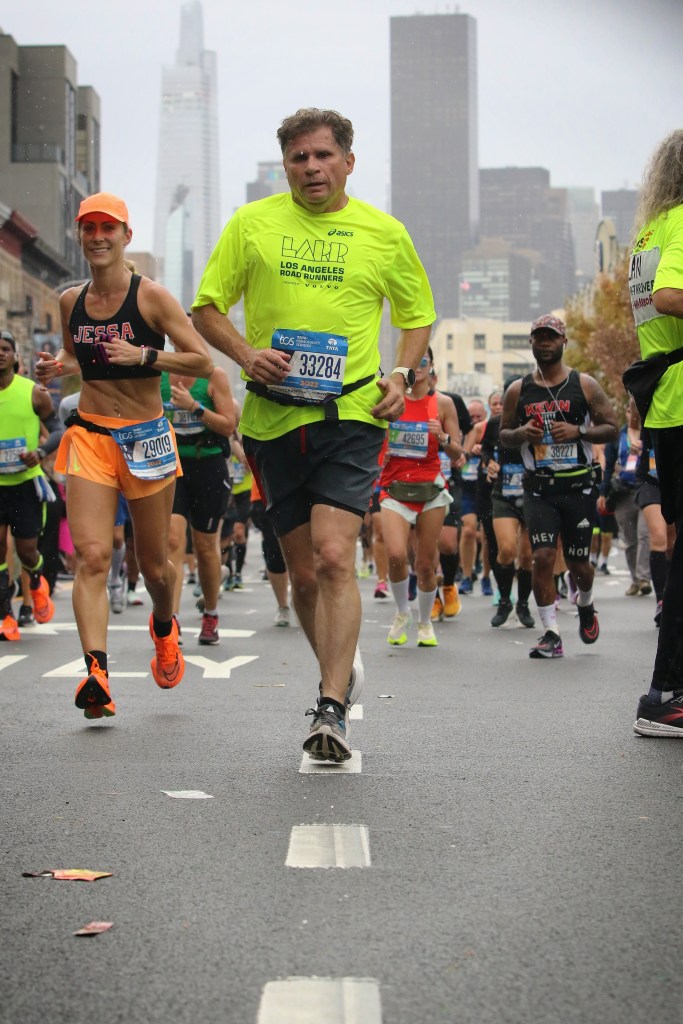
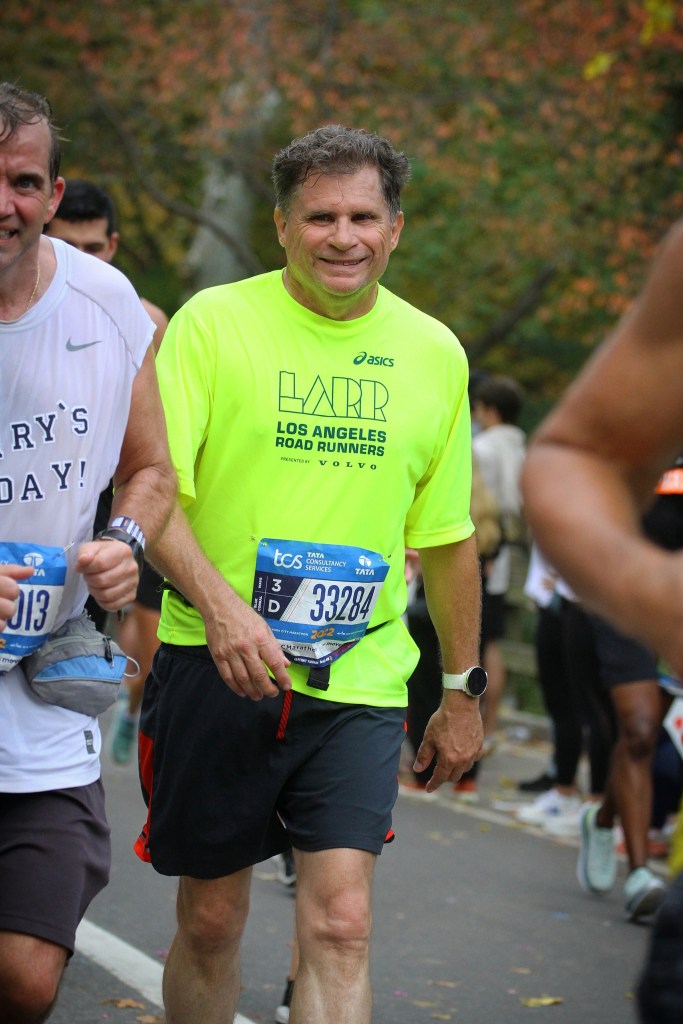
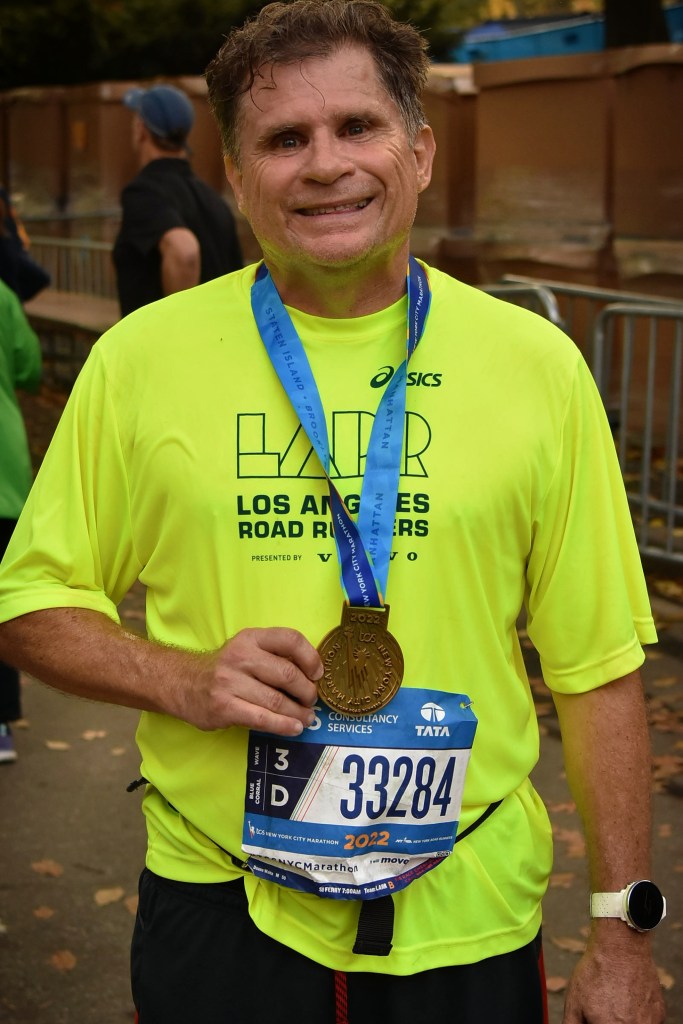
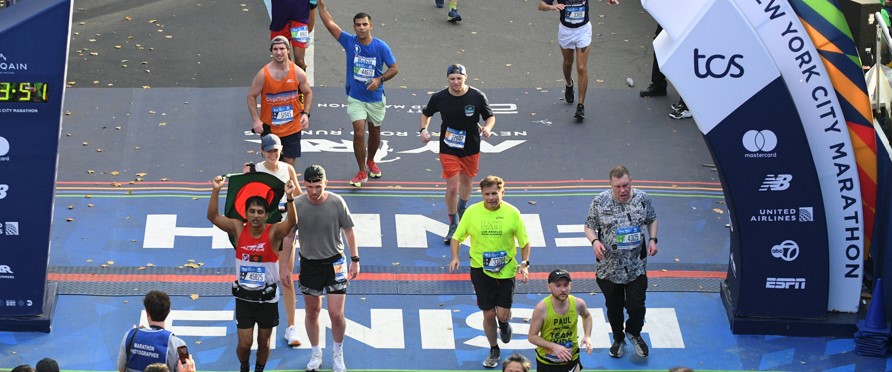
Not the fastest marathon I’ve ever run (in fact, at 5:20, it’s the slowest) but it was certainly the most life changing. Everything about this race was different from my previous experience. The swanky hotel in Midtown, the jam packed transportation system, the hours, and I mean hours, we all spent standing up.

I’ll start there. If you hate standing cheek by jowl next to people you have never met, this is not the race for you. The subway ride from Midtown down to the ferry: Jam packed with runners as well as bewildered locals from where I boarded at 40th and 7th that only got even more jammed as the subway made stop after stop on its 20 minute journey to exiting at the Staten Island ferry. Standing together in a crowd of nearly a thousand to file onto the ferry, where I was able to get some respite by sitting on a bench for the trip to the shuttle buses at Staten Island.

The, and I am not bullshitting you here – at all – ninety minute wait to board shuttles to get to the the start corrals at Fort Wadsworth. Met some interesting people and had some good conversations. Not a lot else to do, so why not?

Skipping the marathon experience for a later post, let’s discuss the jam packed subway ride from 77th and Broadway back to our various stops in Midtown and further south. Packed, in case one needs to remember, with runners who had just finished running an entire marathon in warm humid weather.

And I wouldn’t have had it any other way.

ADDING THIS NOW WHILE I STILL HAVE A FEW MINUTES BEFORE MY FLIGHT BOARDS:

The gorgeous hardwood forest you have to walk through to get to the start corrals. The windy path you take, once it is announced that you are free to begin running, to get to the actual start line.

That bridge from Staten Island over to Brooklyn, which is a surprise in how steep your first mile is.

Eleven miles of Brooklyn, where it felt like the entire borough came out to cheer you on, at full volume. My ears rang after the first few miles of that.

The wonderful mile run through Williamsburg, one of the largest Jewish communities in the US. Not a lot of cheering, but a few coming out to watch, waving their kids’ hands for them to do their part in cheering us on. The number of schools, synagogues and other buildings, inscribed in Hebrew.

The absolute diversity of Brooklyn itself. If I ever have to move to NYC, that will be the borough I’d settle in.

The quiet respite of the 1.5 mile climb up the Queensborough Bridge that seemed to never end. Until it finally did, by dumping you into absolutely the loudest crowd of cheering people I’d ever heard in my life outside a concert or sports stadium: First Avenue in Manhattan. Three and a half miles of the loudest crowd you could ever bear to hear without earplugs or covering your head with the palms of your hands.

And finally, the finish. A three mile run into and around Central Park to the finish line.

My heart is full, literally. Gotta find a way to do this again!

The long, dark trudge through the middle ground

This blog post was delayed by several weeks.
Get over it; at least we’re all still here, right?

Trying to make sense of my emotions, running-wise. I didn’t train as hard as I felt like I should have after Mountains 2 Beach, but I trained. I didn’t do as much strength, flexibility and movement work as I definitely should have done, but I did some. The results? Two half marathons six weeks apart, both a tremendous improvement on my tentative performance at the Mountains 2 Beach half marathon, both ended up essentially the same.

SHORELINE HALF MARATHON, VENTURA. EARLY JULY:

Nervous about how well I was going to do on that cool, breezy morning at the start line overlooking the beach in Ventura. Fellow running friends are there. One of them, a fellow pacer, and another one a new runner who would run with him. Motivational music blares from the start line speakers. Excitement permeates the festival atmosphere, rare on an early Sunday morning but common for road races.

Crack! The starting gun goes off, and we race out of the starting gate, cross a grassy field and file onto the skinny bike path that leads north along the beach, meeting up with the Pacific Coast Highway where a row of skinny, orange pylons protect us all from automobile traffic speeding the opposite way. I lock into a slightly painful but comfortable 9:30/mile pace and with gritted teeth prepare myself for the journey ahead. A few hills, but nothing serious. Four miles in, it feels like we are running uphill. Our visual sense confirms this to us as several runners around me look forward to the turnaround and a nice long downhill run to the finish. We make the turn, but alas, we are denied! The anticipated downhill is just another flat surface that thanks to our depth perception feels like another uphill. Ha! I think out loud. A flat course!

My thoughts turn to my body: it has been about three months since the quadriceps injury. I think back to the strength training, and all the fear and anguish I felt as I realized how far I had fallen behind, and how much work I had done to get back to the point where I could even begin to train again. Look how far I’d come! My fellow LA Road Runners pacer runs past me near the ten mile mark, and tells me the woman he was pacing has decided to walk. He could easily have completed the race with a 1:45 or better time, but hey, it’s just a race, one of many, and it feels great to be out in the sun, running down the beach path on this glorious summer morning. He finishes just ahead of me, and I finish in 2:05 and change, a full ten minutes faster than poor ol’ Mountains 2 Beach a mere six weeks earlier.

I feel great! And with another six weeks to go before the Santa Rosa half marathon up in beautiful (you guessed it) Santa Rosa, California, there is nowhere to go but up!

SANTA ROSA HALF MARATHON, EARLY SEPTEMBER

Nervous about how well I was going to do on that even cooler, breezier morning at the start line in downtown Santa Rosa. Downright bone-chilling. A good omen, though. A few friends are there as well, some running the half, like me, and others running the full marathon. Rows of portable bathrooms, tables set up for post race food and beer in the beer garden. Motivational music blaring from the start line speakers, excitement permeating, yadda yadda yadda.

Crack! Dammit, I think to myself, I can’t get the Strava app on my phone to link up in order to enable family and friends to “follow” me. Fukkit; just use the timer. Off I go, meandering through downtown before hitting the long green tunnel route that follows a creek deep into redwood and wine country. This course is even flatter than Shoreline, and I settle into– hmm; let me check. Yep. 9:30 per mile pace.

I spent $400 including car rental and motel for a repeat of my previous race? Apparently so. But despite the pinched nerve in my left foot giving me a bit of trouble, I hang on, compliment and encourage other runners, cheer the fastest returning marathoners who had started an hour earlier and were now on their way back, and just enjoy the verdant, rolling scenery.

I finish in 2:04.

ANALYSIS

Am I proud of both accomplishments? Undoubtedly yes. Crawling back from a serious injury, essentially restarting my personal racing clock, is one of the most physically difficult things an athlete can do. Especially (and boy do I ever hate to say this, but to deny it would be so, so wrong) at this age. Nine times out of ten, runners in their late 40’s and beyond simply stop training and do something else when faced with the daunting task of getting behind that boulder, and like Sisyphus, grinding him or herself into the menial task of shoving that burden up the hill. Again.

Still, why did I dial the intensity back? Fear of re-injury? No doubt. I had also gained ten pounds. Not sure why about that, either. But it happened.

Between Mountains 2 Beach and Shoreline, I googled training exercises and programs, signed up for virtual training from a well known mountain and trail runner. Did the exercises. Had trouble with her app because of the age of my phone, but it was all right there. I simply– slacked.

CONCLUSION

And perhaps slacking was part of my recovery journey. I didn’t give up. I didn’t even sit down and “re-evaluate” my goals. I know what my goals are, and I know I can achieve them. But it’s like love. Can a broken-hearted person learn to love again? Many do. And acknowledging your broken heart, feeling it slowly and tentatively heal, taking the steps to test its strength, then easing back for a time to catch one’s breath before moving forward again is part of the healing and revitalizing process.

But it’s time to get back on that horse again, to move forward now. Nothing is permanent, and the clock is ticking. I want to see how far my running body can take me. So I need to continue to commit to making all those little tasks– strength training, flexibility and movement training, long runs and speed work, the bedrock of my life again. I need to look a year in advance, and register for tune up races and ultimately the marathon where I will PR and qualify for the Boston Marathon with as many minutes to spare as I possibly can. And along the way, enjoy the long green tunnels and the windy, ragged beaches.

Because we’re only here once, and sometimes, we have to cram two lifetimes’ worth of challenges into the only life we have.

Learn to love again.

2022 Mountains 2 Beach Half Marathon: the first “Give it all you can” race in over a year. How did I do?

First off, I came this close to missing the race altogether.

Race starts at 6:00 AM. Last shuttle bus in Ventura to the start line near Ojai leaves at 5:30. It’s sixty miles to Ventura. What time does my alarm go off? 4:15. Stupid.

I despise mornings with a passion. I’m groggy, slow moving, and a bit depressed and ill tempered in the early morning hours. Getting dressed is a blur, and breakfast is a chore. But by the time I start my car and hit the string of red lights on Santa Monica Blvd on the way to the freeway, ennui turns into blind panic. At 4:40 AM, I finally make it to the freeway.

Cop or no cop, I floor it.

Long story short, the last bus was running late, so I had 10 minutes to calm my ass down before the 20 minute trip to the start line began. And wouldn’t you know it, the race was running late, too. But one of these days, my luck is going to run out. But not today, and it’s never too late to change my habits. I cross myself and swear to whoever might be listening that I will allow myself plenty of time to get to races nice and early. But not too early.

When I first registered for this race last fall, I had visions most wonderful of hitting a shocking PR time, giving myself the confidence I needed to moon-shot a fall marathon (or two) for a Boston qualifier. But of course, injuries. Today, I just wanted to run as best I could and see where I finished. The last thing I wanted to do was injure myself. But it had been three months since the quadriceps injury, I had been slowly increasing my running distance and intensity, and most importantly, I had begun my new focus on twice-weekly strength and flexibility training. An inability to even pedal my bike a week after my injury had become the ability to do three sets of ten reverse lunges on each leg holding a 10 pound barbell in each hand. I had even got to the point where I was beginning to become a bit lazy and complacent. I reminded myself that I had goals ahead, and that slacking off on the foundations of strength, flexibility and movement would put me right back in the mire I had barely crawled out of.

With those thoughts in mind, I crossed the start line and began the first real race I’d run in nearly a year.

Have you ever run through mud? More specifically, have you ever experienced that particular dream when all the hounds of Hell are nipping at your calves and regardless of all the horror your subconscious can throw at you, you just can’t make any headway from the bloody, nipping razor sharp canines? That. For the first four miles. The officials who manage the race had changed the route to allow for road construction as well, so instead of a largely downhill course from start to finish, the course made a hairpin turn a mile after the start and threaded its way back uphill for for the next three. I maintained a relatively even 10:30-ish pace, though it surprised me how difficult that was. Well, of course! An inability to train for 12 weeks, along with having to re-strengthen injured musculature didn’t inure me to a pace I considered fast.

But… I had been training! Not as much as I wanted to, but more than a zero amount. And by the time we turned back around for the long downhill portion at the fourth mile, I found that pace more comfortable. I even sped up a bit, but then forced myself to ease back. Though technically not injured anymore, I knew all too well that I was prone to it. “You’re not going to break two hours today, Duane. It’s not in the cards. And even if you could, do you really want to risk re-injury for a 1:55 half marathon time, a pace that, under normal circumstances, you can run in your sleep?”

I settled on a 10:30 pace and vowed to hold onto it. That would be good enough, and would show me that the hard work I’d put in to pull myself out of all the injuries that beset me over the last several months had paid off. I thought of the weeks of sheer agony from the strained hip and pinched nerve that kept me awake at night, forcing me to shower in hot water several times to overwhelm the nerves and relax them so I could get another hour or so of sleep.

DON’T!! F***!! THIS!! UP!!

I listened, and even took walk breaks near the end when the few uphills through downtown Ventura reminded me of how pitifully out of shape I really was.

And I finished, in two hours fifteen minutes and ten seconds.

2:15:10. A full half an hour slower than my best time, and twelve weeks after I couldn’t walk without a limp and was in so much pain I contemplated searching out black market medications that could relieve me of the agony (well, let’s just say I came to an understanding of why some people do that very thing and leave it at that. It’s one less aspect of being an imperfect human that I’ll be “judgy” on from here on out).

I have another half marathon in four weeks. Getting back into my strength training. Forcing myself to run 4-5 days a week, even if it’s only for a few miles. Allowing myself to suffer through the muck of getting back to where I was before all this went down. Appreciating where I was, acknowledging what happened, and accepting all the challenges that will get me to where I want to go if I put in the work. And last but not least, accepting that nothing in life is guaranteed.

2021 Santa Monica Classic 5k (“Race” Report)

David Levine, coach of the LA Roadrunners (“the official training program for the LA Marathon!”) was understandably disappointed when I informed him of my injury back in August. But it was a blessing in disguise because he needed volunteers to help run the water tables during our Saturday long runs. And as a pace leader, expected to motivate, guide, and ultimately pace runners who wanted to run the LA Marathon at ten minutes per mile pace, naturally I was expected to volunteer. Which I did. Grudgingly, but with a smile on my face every Saturday morning as I watched my group, led by other pace leaders on my team, head out for a shared adventure knowing I would be somewhere along the course to hand water to them when they ran by.

Shortly after my appointment with my orthopedist, my Achilles pain began to subside. Shocked, shocked I was, as a pain that remained pretty much at a constant 3-4 out of 10 scale began to subside to a 3, then a 2, then — to my utter astonishment, a 0. No pain at all. Perhaps it was the Naproxen horse pill he prescribed for me to take twice daily (“don’t do any running for 7-10 days, take the Naproxen twice daily, and allow the nerves to settle down,” he counseled). Perhaps it was the fact that I had begun to do daily eccentric heel drops, prescribed by Dr. Google (always a dangerous source of advice!). Perhaps it was just the fact that knowing I was beginning physical therapy convinced me that my issue was understood, “heard,” empathized with, by a medical professional who knew from whence he spoke.

I showed up on that first day at physical therapy, knowing that I would be “seen,” that my issue would be acknowledged and treated. This was perhaps part of the reason my pain essentially disappeared. Of course, a mild Achilles injury is not cancer or a major illness, so I felt a bit guilty that I was seeking, and finding, relief from my petty issue when so many more people with far more dire consequences than mine, were traveling a more treacherous road. I assuaged my more privileged position with the idea that perhaps I would encounter a serious medical issue at some point later in life. Not a pleasant thought, but the future is unknown to all of us. So taking care of myself at the moment seemed the proper course to take.

Feeling a bit antsy to try out my healing tendon, I placed some heel wedges in my running shoes and went on short, easy runs. Within about ten days, I risked a ten mile run up Sycamore Canyon in Malibu, praying fervently that this extended jaunt would not set me back. It didn’t.

Elated, I asked Coach David about entering the Santa Monica Classic 5k race to get an idea of how I was healing. He agreed with a bit of caution. “I have three goals for you, Duane: Run this race easy, cross the finish line uninjured, and enjoy the post race pancakes.”

Worked for me.

An easy jog the day before to pick up my race bib at a local Big 5 Sporting Goods store near my home gave me some relief that I was still able to run without pain, and I slept fitfully that night, arriving at the starting line, mask in hand, ready to see what running an easy race would feel like.

“Racing” in the time of Covid.

Used the bathroom one last time. Listened to the national anthem. Adjusted the heel wedges in my shoes to make sure they were in the right place. Endured the announcer’s overly cheery time killing banter before the race director decided that enough was enough, fired the starting gun, and sent us on our way.

How thrilling it was to follow a close packed herd of runners stampeding down the narrow streets before turning onto Ocean Blvd, the main race route! My heel wedges stayed in place and I felt my body’s desire to surge, cut loose and floor the gas pedal. How proud I was of myself that I eased back. After all, I wasn’t going to win an age place medal at this race, anyway, after not running for several weeks. I was here for the experience, for the relief I felt that my racing days were indeed just beginning, not fading into the sunset.

Besides, at a lethargic nine minutes per mile pace, my heart was already pounding deep into Zone 3, tempo effort. I sighed. Just endure. Just cross the finish line. Enjoy the pancakes at the end.

27:49 for the 5k route. An even nine minute mile pace. Eighth place for my age group. Based on my fitness before injury, I could have easily beaten the second place age group finisher’s 24:01 time by a full 90 seconds and captured silver. No way would I have come even close to the 18:57 time the first place finisher ran.

But that’s ok. I’ll get there.

Mountains 2 Beach Race Report (Don’t “touch” me!)

Status

Duane Waite's avatar
Mile 15-ish of Mountains2Beach’s Long Green Tunnel

A number of “firsts” for this marathon: My first ever “virtual” marathon, but that’s not strictly true. The version we ran was on the official course, we were tracked via a GPS app called RaceJoy, and if you ran a Boston Qualifying time, it’s an official BQ! Welcome to the… not virtual, but touchless Mountains 2 Beach marathon!

(Which we paid over $100 for. There is an actual “virtual” marathon which cost far less money, but you didn’t get a swag bag filled with stuff you’ll never use, and you have to plot your own damn course, though no one is stopping you from running with a bunch of friends who paid for the $100 version, which is something I probably should have thought of)

I ran with LA Road Runners’ Run Group 4 headed by Kent Sandie, who unofficially hosted Saturday runs throughout the winter and early spring with the goal of finishing a late spring marathon. We had to provide our own support along the way (thank you Kent and Dawn!), and find our way along the route with RaceJoy’s guidance, which was spotty and ambiguous at times. But we treated this “race” more as a marathon distanced long run, took plenty of breaks along the way (“first” #2) and all finished at around the same time: 4:40. Not blazing fast, but since our last marathon was fourteen months earlier, we relished the experience of just getting out there and running again and enjoying each others’ company.

Oh yeah: “first” #3: this was the first time I wore a running pack instead of carrying a water bottle in a holder in any run over 15 miles. For runs like this where one is not racing, the Nathan 7L is a great option. Thank you, Nathan!

I always feel a bit of trepidation before a race, even one where we are all just hanging out at a ten minute mile pace for several hours. In a way, it’s good; races are opportunities to punch through barriers and show yourself what you’re capable of. This nice, easy long run was no exception. A shoelace mishap put me behind the group for the first few miles, and I slowly and carefully inched up my pace to catch the group. But after our first break, a perhaps-too-long 11 minutes or so, I found myself in the comfortable running groove. Even at mile 23, when most runners wish for either the finish line or death (whichever comes first), and when I knew that stopping for the last water stop break would probably end the run for me, I didn’t feel half bad.

But that neuroma of mine. After stopping at least three times to massage my poor left front foot (on top of the opportunities I took to do just that at water stops), I began a segment called 400 meters of absolute f–ing hell: a section of the Ventura beach path made up of cobblestones. Each the perfect size to press firmly into my forefoot and cause my neuroma to squeal like a stuck pig. Good grief, that was agony. And it took a full two week stoppage for the pinched nerve to calm down enough to keep me from worrying if I’d ever run again. Fixing this damn thing is the next thing on my list after getting a few slightly more serious health issues resolved.

But we all made it. And we’re back. Coming up: the postponed 2021 LA Marathon (November), California International Marathon (four weeks later), LA again in March of 2022, and most likely Mountains 2 Beach. Stay tuned.

2019 California International Marathon Race Report

Better Late Than Never!!

First of all, the California International Marathon race course is much prettier than I thought it would be. The only reference I has was a course review on Youtube which led me to believe that I would be running through suburban drudgery. Far from it. The little towns we ran through, from Folsom, into Carmichael, and into downtown Sacramento itself have unique characters. While there certainly were strip malls and bland, suburban tract housing, elements of the frontier west and the Gold Rush made it easy to forget all that.

And the layout of the course itself, with long, straight lines for miles (seemingly) without end and very few turns enabled me to get lost in my run, relax and enjoy the scenery.

And now, for the race!

The starting gun went off while I was still in the Port-a-Potty, so I crossed the start line about five minutes later than I thought I would. I caught one of the 4:00 pace teams, however, and I figured that I would run with them for a few miles to warm up, then slowly run ahead at 8:45 pace to match my goal time.

Within moments, I knew it wasn’t going to be the plan.

The California International Marathon is a net downhill race, but the downhill is almost not noticeable: a 350 foot drop over 26.2 miles. In round numbers, about a three tenths of one percent drop. What there were, however, were lots and lots of hills, starting with the first mile. Small hills, to be sure, and in the back of my mind I knew they would be there. But they still took me by surprise, so much so that I dialed my pace down again, allowing the 4:10 pace team to catch up with me and then running with them for the majority of the race.

But as it always does, the training I came to the race with eventually kicked in, and I settled in to just under a 9:30 per mile pace, my first priority to simply get through the race standing up. I helped myself feel better by engaging in conversations with people around me, including a young man running his first marathon (who I gave several helpful bits of training advice), and amusingly, a high school girl who, responding to my “thanks for coming out!” to her group of friends, yelled “I’ve gotta give that guy a high five!” High five’s exchanged, I marveled at how light our burdens can be made to feel if we allow others to share them with us.

We ran in perfect weather. Not as cold as I was told to expect. The skies threatened rain, but all I felt was a refreshingly cool and moist breeze that left me dripping but energized despite the fact that I was struggling more than I expected to.

Mile 12 and dripping wet

Hanging tough at mile 12

For example: at about mile 15, my Morton’s Neuroma kicked in. and at that point it was going to be a race of attrition. Who’s going to win this battle, the race course, or me? Here’s how my internal dialogue went:

“One mile at a time, kid, one mile at a time.”

“But it’s mile 16!” I shot back to myself. “There’s ten miles to go, my ‘A’ goal is in the rear view mirror, gasping for breath and looking for an ambulance, and everything just friggin’ hurts!”

“Well, of course!” I replied to myself. “This is how mile 16 is supposed to feel like.”

“It’s only mile seventeen, now!” I countered a few minutes later.

“Sure is. And you made it, too, didn’t you? Does it hurt any worse?”

“Can’t tell for sure,” I replied.

“There you go. And look, we just passed the 30k checkpoint! You’re killing it!”

“Well, I guess I feel ok,” I admitted through gritted teeth, “but things are slowly getting worse, by tiny degrees, and I’m slowing down just a bit, too.”

“Then pick it up a bit! The shock to the system will do you good. And look, there’s that “wall” display with the Rocky theme music playing at mile 20! Run through it and go ‘Woooo!’”

“I’m not yelling “Woooo!”

“Suit yourself.”

Long story short, I could feel myself slowing down as the race went on into the latter stages. My 9:25 had turned into a 9:40, even though by mile 21 there weren’t any hills left, and the lack of them gave the illusion that the rest of the way ahead was a screaming downhill (an optical illusion; the course is pretty much pancake flat from that point). But I had pushed through mile 20. Miles 21 and 22 were history, and though my foot was in screaming pain, I was persevering. No 3:50, no sub 4, but the dance party at the H Street Bridge was pretty damn inspiring, and I was killing it before it was killing me with less than 5k to go.

Then the Katzenjammer Twins, known as full body fatigue and, shall we politely say, gastric rumblings, strolled onto the scene and I lurched clumsily into a very undignified stagger.

Recalling an earlier lecture in race walking, I alternated between pumping my arms while striding like a madman and running, all while looking for the closest latrine available. Luckily there were none, because if I had found one and stopped, I doubt I would have been able to start again. So I put my head down and gutted it out, the fight now down to my pain vs. How much longer did I really want to be out here.

At mile 25 the finish line festival was a dull roar, which got louder as we drew closer to the Capitol building. The last half mile was spent dodging pedestrians and staggering finishers making their way back to the hotels. Then that grand U turn onto the Capitol grounds and the finish line, perfectly framing the imposing structure just a hundred yards ahead. If I wasn’t suffering so badly, I would have appreciated it more. But I was suffering. Badly.

Suffering badly

Suffering. Badly.

I finished in 4:19 and change. Nowhere near my goal, but grateful to have survived. Drank some of that awesome hot chicken soup at the finish line festival, located the drop bag zone and tried to sip the chocolate milk waiting inside my drop bag while staggering around looking for an exit out onto the street and back to the hotel.

Found one, made my way to the hotel, showered, got dressed, Netflixed and chilled, grateful for a friend and fellow CIM-er who used his hotel points to get me an extended checkout (thanks again, Russ!). Oh, and didn’t cry.

Finish Line

Finally

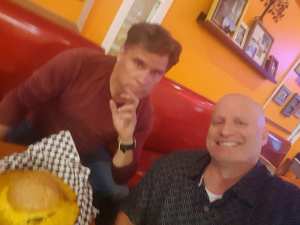
A few hours later, my brother Bob, who is commuting weekly from Gilbert, AZ to Sacramento for work, joined me for a post marathon meal at Squeeze Burger a few blocks from the motel, an unexpected, and grateful, surprise.

Me and Bob

Brothers hanging out!

So: what went right, and what went wrong:

RIGHT:

My mileage increase. My number one weakness isn’t a lack of speed or even strength: it’s time on feet. I increased my mileage to 40+ miles per week for three weeks in a row, including a 45 mile week just a few weeks before the race.

Hill training. I greatly increased my hill training for this cycle, which helped me run as well as I did. Without it, I’d probably still be out there. Included was an 18 miler consisting of three hilly loops with about 400 feet of elevation gain per loop (what the locals here in LA call the Amalfi Loop).

WRONG:

Despite all the hill training and increase in overall distance, I was not prepared for a relatively flat course with rolling hills. As race day recedes into memory, I’m starting to realize that most of my troubles were mental. I had never run the course before, and despite my preparations and overall marathon experience, I was not prepared for all the rolling hills that particular course.

The other part is that it simply takes time for increases in training volume to make their way to the cellular level. I have no doubt that as I keep up the efforts I started back in the fall, and gradually increase my overall volume to fifty, and hopefully by my next PR attempt, 60 miles in a week, something inside will kick in, and I will see monstrous improvements.

And besides that, my ability to run through the pain and discomfort I encountered out there really surprised me. Something about those extra miles, hill training and tempo work manifested itself that day and helped me finish strong on a day when I wasn’t sure I’d even finish.

Next up: Pacing runners in the LA Marathon to a 4:22 finish as a Pace Leader for the LA Roadrunners in March, a brief recovery, then an all out assault at the Mountains 2 Beach Marathon on Memorial Day weekend.

And has the California International Marathon seen the last of me? Hell no. I want revenge, and I’m going to get it!

RACE REPORT: IronMan Tempe 70.3 Relay — October 20, 2019

(Yeah, I’m a bit behind in posting some of these entries. Not sure why; the next marathon I’m training for, the California International Marathon in Sacramento, takes place in less than two weeks, and I have a slew of entries written but not yet posted about my preparation and where I stand vis a vis PR-ing. I could blame myself and whatever personal issue I’m having with this whole BQ fascinationfor the delay, or I could shift the burden to something outside myself, say, Hillary’s emails. Sure, that.)

I sat in the shade of an administration building near Tempe Town Lake with my high school friend Neal, watching the relentless sun, unfiltered by so much as a thin haze, let alone a cloud, climb higher in the sky. Neal was the one who convinced Richard, another friend from those sepia toned high school days, and me, to share in the Iron Man experience, something he had taken up years before. My facebook posts were largely running related, and Richard shared his experiences battling wildlife, inattentive drivers, and fellow cyclists on the roads and bike paths of Phoenix’s East Valley. Clubbing our various middle aged physical talents into a single grand event was the natural thing to do.

Sunday morning was cool and pleasant as Richard and I walked back to the Transition Zone to wait for Neal to complete the swim leg. Richard would be next on the bike, and he instructed me in the basics of his camera so I could take photos of him during his leg. Used to a simple point and shoot, I struggled with Richard’s larger and more complex camera, completely missing him on the first two of the three laps of the bike course, and catching perhaps a blurry shot or two of him finally on the third and final lap (Richard is a professional photographer). In the meantime, the sun transformed itself from an ochre toned source of gorgeous morning light to an unfiltered beacon of radioactive death. The temperature had climbed from a pleasant sixty degrees to a PR killing eighty, and inwardly I worried if I would be able to run my half marathon leg in under two hours, which had been my fallback goal if I couldn’t make 1:50 or better.

Richard biked into the transition zone, unstrapped the timing chip from his calf and handed it off to me. I strapped it around my own leg and ran through the zone and onto the run course. The course was a series of out-and-backs along Tempe Town Lake, starting with a two mile run to the first turnaround, a two mile run back, then a slightly shorter run the opposite direction and across a pedestrian bridge, then back to the start. Returning to the start marked one loop. After the second loop, runners were directed through a long finishing chute that circled around to the finish line.

The first half mile was easy. Shaded by tall buildings, I ran along a series of concrete paths that were just hilly enough to keep me from getting cocky and burning energy too quickly. Then the path dumped me onto a packed dirt trail, directly into the view of the burning sun. Oh, boy.

Non runners might not fully understand, but heat, even as benign as a pleasant 80 degree day, is very difficult to run in, especially under full sun. One might perspire a bit while undertaking a pleasant stroll in such conditions, and even an easy jog is doable, as long as you know your limits and know when to turn around for some shade and a cold refreshment or two. But actual racing is a different beast. However, the bigwigs at IronMan Corp arranged for aid stations at every mile along the course, and I took full advantage of each one:

One swig of water (each odd numbered mile)

One swig of Gatorade (each even numbered mile)

One additional cup of water to dump over my head and down the back of my shirt (every mile), and

One cup of ice in the cap of my running hat, replenished continuously as the previous ice melted away.

An additional adjustment: negative splitting the race. The first lap was all about maintaining a respectable race pace while letting the idea of setting a PR go. For me, that meant maintaining a relatively slow 9:15 per mile pace, just 15 seconds per mile faster than my normal easy pace. In the heat, however, it felt more like 8:00 per mile on a bad day, but I could sustain it and see how I felt at the end of that first lap. I ran past Neal and Richard as they relaxed under the shade of Mill Avenue Bridge. I managed to mug a bit for Richard’s camera, but even his considerable photographic expertise could not hide how I truly felt.

I ran to the pedestrian bridge, hit the turnaround, and doubled back toward the starting line, where a sign directed finishers to the chute on the right, and those of us who had another hour or so of misery to continue on the left. It was at this point where I’d planned to hit the gas and negative split the run. Mile 6.55, the halfway point of the half marathon, showed I had two minutes to make up to finish in under an hour. Unfortunately, it was past noon by this point and the day had just gotten hotter.

“Just gut it out!” I told myself. “You’ve got to finish at some point, whether you ‘run, walk or crawl,’(*)” I took a deep breath and just did my best to enjoy the moment. I was running an IronMan relay with friends, enjoying the day, testing my limits, taking a measure of how my training for the California International Marathon was coming along. Carpe Diem! You only live once!

I did my best to “embrace the suck,” as they say. I was also trying as hard as I could to ignore the Morton’s Neuroma, a pinched nerve that throbbed between the third and fourth toes of my left foot like a misfiring spark plug. Embrace the suck, indeed.

With three miles to go, I decided to hit the gas for real. After all, other athletes who were either finishing or waiting for others to finish were milling about, and now was not the time to look like I was suffering. To finish under two hours meant that I had to increase my overall pace from 9:17 per mile to under 9:07, and I had very little time, which meant that I had to run the last three miles at 8:30 or better. Fortunately, my fuel, hydration and cooling strategy gave me the oomph I needed to make it work, and after I hit the last turnaround, I went for broke. Damn the torpedoes! Full steam ahead!

I ran the final mile in 8:15, and with an immeasurable amount of relief, I turned right at the sign towards the finishing chute and ran the final tenth of a mile in a heat induced haze of dizziness and euphoria. “And we have a relay finisher crossing the finish line, Duane… Waiyott– Wait-e? Waite?” No one gets my last name right the first time they read it, damn them.

Didn’t matter. It was a wonderful experience, and I crossed the finish line under two hours, with just seconds to spare. 1:59 and change. I’ll have to look it up and get the exact time. But I did it.

Here’s to Carpe Diem, seizing that day, embracing the suck, and living life to the fullest, and sharing the experience with good friends.

Mountains 2 Beach Race Report: Black Clouds and Silver Linings

Did I run this marathon in my “A” goal time of three hours and fifty minutes or less? Did I break four hours, a “B” goal booby prize I’ve been striving for ever since I toed the line in March of 2013 for my first ever marathon? No, and no again.

But I PR’d by seven whole minutes, and therein lies a tale.

The goal back in March, after successfully pacing 4:22:00 at the LA Marathon, was to continue the plan I had first concocted at the beginning of 2019: train to run LA at 8:45 pace, for an approximate 3:50:00 time. As you recall, the idea was to train specifically for LA at a pace a half an hour faster than the time I would be expected to finish so that I could run the expected pace comfortably enough to help the runners who depended on me to get them over the finish line at the time they had trained for. It worked. This year’s LA Marathon was the easiest marathon I’d ever run, and it showed in my ability to “be there” for my struggling pacees.

And after two weeks rest, I directed my focus to Mountains 2 Beach, six weeks away. I increased my speed work and ran more hills: Santa Monica to Inspiration Point in Will Rogers State Park (twice), three sets of what we call “Amalfi Loops” which are runs up and into the hills of Brentwood, back over to San Vicente Blvd at the Santa Monica / LA border and back down. Six miles each.  At least two loops for each set. Over a thousand feet of elevation gain and loss each week. Long, hard tempo runs every Wednesday along the Santa Monica beach path, from the Pier to the boat house and back. Seven miles round trip, nine if you count the warm ups and cool downs. Half the distance at my true tempo pace (8:00 per mile), then back at slightly faster than my predicted 8:45 marathon pace for Mountains 2 Beach. Oddly enough, I would look down at my watch, particularly during the last two weeks before the marathon, and notice that my 8:00 miles had turned into 7:45’s. Definitely getting fitter, faster.

Bring it on!

My weekly mileage took a bit of a hit, however, as a result of all this speed and strength training. Didn’t run a 50 mile week once between LA and M2B, even though I easily hit that goal three weeks before LA. The hills and speed work took it out of me. But could I have done so, had I forced myself to? Undoubtedly.

And that’s the key word right there. Doubt.

I felt fresh and prepared early Sunday morning, the day of the Mountains 2 Beach marathon. I spent the previous afternoon lounging in my motel room fueling, hydrating and Netflixing. Slept well. Boarded the shuttle, made it to the start in downtown Ojai in time for multiple Port-a-potty visits, and lined up at the start, raring to go.

Then I thought about the first three miles of the race, the fact that after the relatively flat, easy mile, two more with a nontrivial uphill grade awaited. That set my rumination cycle in motion: I’m running at 8:45 pace. If I slow down 30-45 seconds per mile for the first few miles to warm up and preserve my precious carbohydrate stash and leg strength, will I still be going out too fast? After all, I didn’t run faster than about 9:45-10:00 miles up all those hills while training. Would 9:15 on those two uphill miles set me up for trouble at mile 20?

In response, I made the decision to run with the 4:00:00 pacers for the first portion of the marathon to tamp the intensity down, then speed up in time for the big drops at miles 8-14, and coast to an easy 3:50-3:55 to the finish. Big mistake. Because by the time I felt ready to run ahead, the 4:00:00 pace was already locked into my legs.

However, the pacer knew we all wanted to run under four hours, so she helped us out, easing us forward to the point where we were two minutes faster than 4:00:00 by about mile 22 or so. I was hurting by that point (as everyone was, including the pacer), but when we turned the corner onto Thompson Drive in downtown Ventura, a tiny little molehill at mile 24 loomed too large, and despite my internal urgings that the time was NOW to break that four hour threshold, despite the fact that I had run conservatively and consistently, and that mile 23 was my fourth fastest mile in the race (8:52), I hit the brakes and slowed to a fast walk. If you look at my TomTom pace graph, you can see where I willed myself to the finish line with a combination of staggering, race walking, swearing loudly (to the point where I’m sure people thought I was nutzo) and running. I consoled myself that a PR is as good as any “A” goal I could possibly set for myself, and I willed myself over that finish line.

4:03:48.

M2B 2019 PACE GRAPH

******

Looking back on what I’ve just written, I realize that it reads like a confession wrung out of a suspect under hot lights. But the fact of the matter is I PR’d by seven whole minutes! And I accomplished that because I trained for it! That’s saying something. This propensity I have to minimize my own accomplishments because of a failure to cross over a preconceived threshold is genetic in nature, I suppose, but it’s something I absolutely have to come to grips with and get past.

Because now that we are through the LA and Mountains 2 Beach cycle, I can take a deep breath, recover, recoup some strength, and set my sights on a big goal. Big. Just you wait and see kinda big. Huge. Yuuuuuge.

The secret is specificity in training: Long runs with sections where I run marathon pace or slightly faster, especially near the end of the run. More familiarity with the uncomfortable tempo training pace. Hills. Recovery. Dropping about ten pounds or so. And a whole hell of a lot of base building, which has always been something I’ve struggled with.

Will this new goal be arbitrary? Probably. Is it realistic and achievable? Most definitely. Will I have this same conversation with myself if I somehow fall short? Hey, you know me.

You’ll hear all about it on the next exciting episode, so don’t even worry about it. (That last phrase was meant for me).