My Latest VDOT Test

Back in September, I signed up for the virtual Santa Monica Classic 5k. A week later, I received a nifty little box in the mail consisting of a runners buff, fuel samples, a T shirt and last but not least, a finishers medal.

Many things conspired against me actually “racing” this event, virtually or not: I wanted to train for it for a fast PR. I’m already running a great deal throughout the week, I don’t have the time to drive to the one place where I can be guaranteed a fast course, and even if I did, I have plenty of time before the December 31st deadline.

On Christmas Day, I realized that I had almost run out of excuses. And since I had no plans to travel anywhere to get infected with “The Cov,” there was nothing stopping me from earning that finishers medal except laziness.

At 2:00 PM, when foot and bike traffic on the Santa Monica bike path was as full as you would expect at mid afternoon on a major holiday, I took a deep breath, expelled it, and launched myself south down the bike path. Dodging walkers, cyclists, automobiles and even other runners, I made my way along at a semi uncomfortable 7:30/mile pace. Within a half mile, I knew that would be my pace, no matter how much I wanted it to be faster.

But this was a VDOT test, after all! I rationalized. This tells me where I’m at:

Average for each mile was: 7:30, 7:40, then 7:30 again. With a tenth of a mile to go (that pesky 0.1!) I pushed myself to the limit, averaging 6:45 for that little stretch.

So where am I? Exactly where I was this time last year, and 45 seconds slower (overall) than I was five years ago.

I’ve done a lot of things right, but if I want to do more than merely “hold place” as the years tick along, I’m going to have to train smarter.

That’s what the new year is for. How will this next revolution around the Sun go? Stick around and find out.

The Runs of Summer

After a long delay filled with nothing at all but endeavoring to train consistently and dealing with real life, here are a few photos of some of the runs I wrote about in my previous post. And yes, I will be posting more frequently now that some non-running related stresses have been removed, and that there appears to be a bit of light at the end of the tunnel to this whole Covid thing.

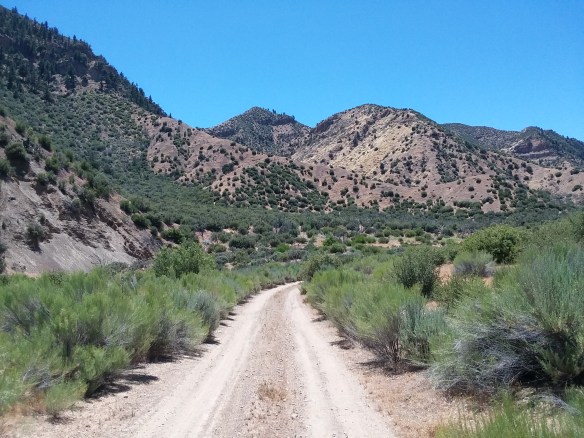
Dry Canyon Road

About an hour north of Ojai along Highway 33 is a lone stretch of landscape called Rancho Nuevo in the Los Padres National Forest. The road runs about 20 miles north up into a land of scrub pine and year round springs, then down into appropriately named Dry Canyon.

This area is, by far, THE most remote feeling location I’ve ever run in. Not even runs in bona fide wilderness areas feel as remote as this run, which is why I return to it as often as I can.

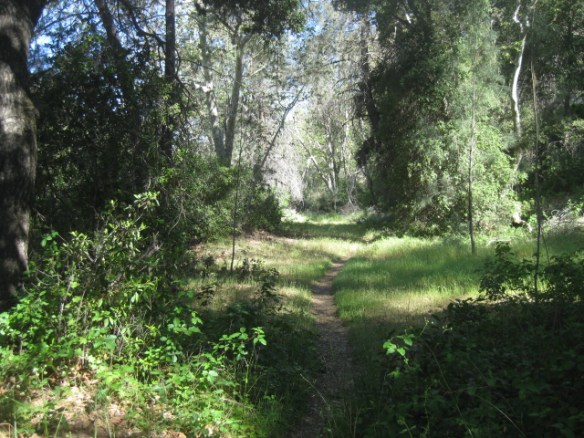
Manzana Trail
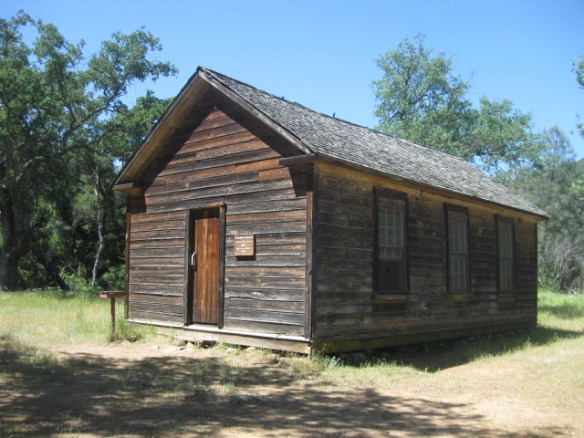
Manzana is Spanish for Little Apple. Apropos since this 8.5 mile trail takes you to a turn of the (previous) century school house, long since abandoned.
Manzana School house
Manzana School House

This bucolic scene is called the San Rafael Wilderness, about an hour north west of Santa Barbara. To get to this particular trailhead, you have to navigate a paved road where the word “paved” means that careless driving can remove an axle, particularly from a twenty year old low-slung Honda Civic.

The trail itself is called the Manzana Trail, and it leads about 8.5 miles from the start near Nira Campground to a turn of the (previous) century one room school house where homesteaders attempted to settle and tame the land. It didn’t work, but the upside is it’s an amazing place to spend three hours running through streams without slipping, and dodging resident horses who claim the space where a working ranch still exists by ambling up to you out of nowhere and neighing a horsy “hello.”

Whitney Trail
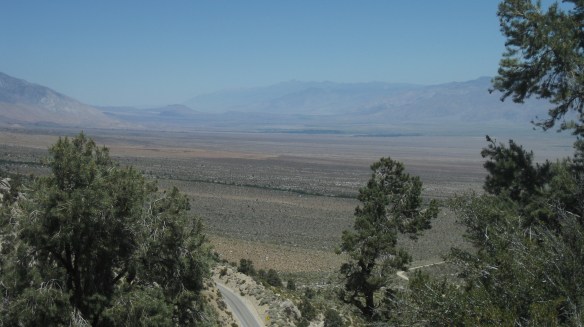
Did you know there is a trail that runs up to the actual Whitney Portal? There is, and I ran it.

This beautiful photo of the southern Owens Valley was taken half way up three miles of living hell. You can see a portion of the Lower Whitney Portal trail on the lower right, which from that point ascends a lung busting 20% grade up to my current vantage point, a mere two and a half miles from the start, with about another mile and a half to go. The entire route ascends nearly four thousand feet in elevation over four miles. But it takes you up to Whitney Portal where they serve an awesome turkey burger. Which is perfect mid level ballast for the harrowing descent back down.

Thousand Island Lake
The Sierra Nevadas, as envisioned by Satan.
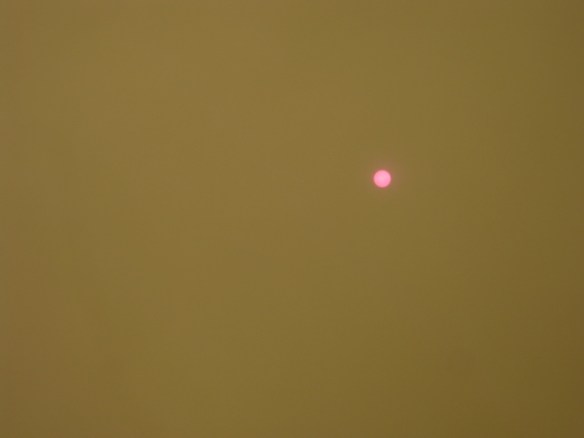
Alien Sun
Alien Sun

Through the burning hell of a forest fire I ascended. My reservation at Reds Meadow Resort and rental car too expensive to waste sitting around stewing in ash and getting angrier and more frustrated by the second, I put my lungs to the test and ascended the nine mile segment of the Pacific Crest Trail north of the Devils Post Pile National Monument up to an intersection with the John Muir Trail at Thousand Island lake. Oddly enough, the smoke seemed to dissipate once I passed 10,000 feet elevation, but that may have been the hypoxia speaking.

But seriously. The weather was clear as a bell all the way up I-395 until just south of Mammoth Lakes, when a bank of storm clouds I assumed was some sort of late season thunderstorm resolved into an ash cloud generated by the fires near Fresno and the western entrance into Yosemite National Park. I knew there was a health risk when I took off for this six hour excursion, and I should have made other plans. But I survived, and the lingering cough I caught from it dissipated after a few days. After the fact, I find myself googling terms like “lung cancer risk” and PM2.5 hazards. What’s done is done, but…

Eighteen round trip miles of Sierra awesomeness with 3,000 feet of elevation gain, but at what cost? WHAT COST?

The runs will continue. Moving through wilderness at person speed is essential to maintaining my love of running so that I can reach the goals I’ve set for myself, and most importantly, surpassing them. Because if not now, when?

See you next.

Injury, Mom passes, Covid, more injury, and finally a view through the worst of the gloom (sort of), or Two injuries and a funeral

The last time I made a post in this here blog-o-mine was when?

January 13, 2020? Yargh.

I won’t go into all the details because I think the title says it all. Let’s just say that as of now, 2020 has been “a hell of a year” for pretty much everyone and leave it at that.

Onward!

After speaking at my mom’s funeral and muddling through the rest of my training for the LA Marathon and the marathon itself, I treated myself to recovery from overuse injuries, primarily to my right ankle and calf. I eased myself gently back into the sport, choosing trails and landscapes to keep myself motivated and congratulate myself for my patience during those early days in the pandemic when I merely walked screaming into traffic instead of risking injury and running into it.

The landscapes included:

A 16 mile round trip trail run in the San Rafael Wilderness north west of Santa Barbara to a historical oddity called Manzana School house.

A run up the fabulous Mt Whitney Trail from Lone Pine camp up to Whitney Portal. That one was a doozy, even if it was only eight miles in length.

One of the most remote jeep roads anywhere: the Tinta Trail, deep, deeeeep in the heart of Texas Dick Smith Wilderness where Highway 33 meets the Lockwood Valley Road. Most of these places don’t have names.

I spent May and June camping the day before these runs, using the ground as my bed (with four inches of PosturPedic mattress doing yeoman work keeping me relatively comfortable) and a 40 degree down sleeping bag separating me from The Vast Uncaring Universe that rotated above my eyes. (Learned that the Andromeda Galaxy, a fuzzy patch of light primarily visible during the fall and winter months can be made out in early mid-summer mornings if you know where to look).

Just–reacquainting myself with why I enjoy running so much in the first place.

Which of course brings us to now:

(Oh, before we get there, here is a small list of runs I have yet to do, and may put off for a while as I formalize my aerobic training for upcoming marathons that may or may not happen. All are google-able if you have the curiosity:

(A 17 mile loop run along a route that John Wayne made famous: Movie Road, up the hill from Lone Pine with Mt. Whitney in view

(A 16 mile out-and-back in Yosemite NP from Tuolumne Meadows into Lyell Canyon along the John Muir Trail. One of the very few extended running routes that features soft, runnable trail and almost no elevation gain, though the trail starts at 8,600 ft (2,620 m).

(An 8 mile loop in the Sequoia National Forest called Big Meadow. I almost did that one a month ago, but realized when my car wouldn’t start while moving it to a more secure spot that perhaps there were other priorities I should focus on, like actually getting home.

(And finally, a horrific little 20 mile too-dee-loo up McKinley Peak Road in the Los Padres National forest to a pine forest and year round spring, and an overlook that takes in the vast Santa Barbara back country.

(Enough of these; I grow weepy and despondent. Carrying on.)

While recuperating from injury, I decided it would be a good idea to take on the following running-related projects:

Flexibility. I have extraordinarily tight calves. I also have an internet connection with my own little wifi hotspot enabling me to view my favorite yoga video of all time on my phone while I stretch. A big lesson I’ve learned over the years is that flexibility is a whole body experience, not a problem to be laid at a specific area. This little 20 minute video is short enough to do every day, but comprehensive enough that I began to notice improvements to my overall flexibility after a week. About 14 years ago, I suffered a near catastrophic calf muscle tear after an ill advised super calf-stretching session. The muscle eventually healed, but as recently as four years ago the injury returned, leaving me unable to run for several weeks while it healed. Lesson learned.

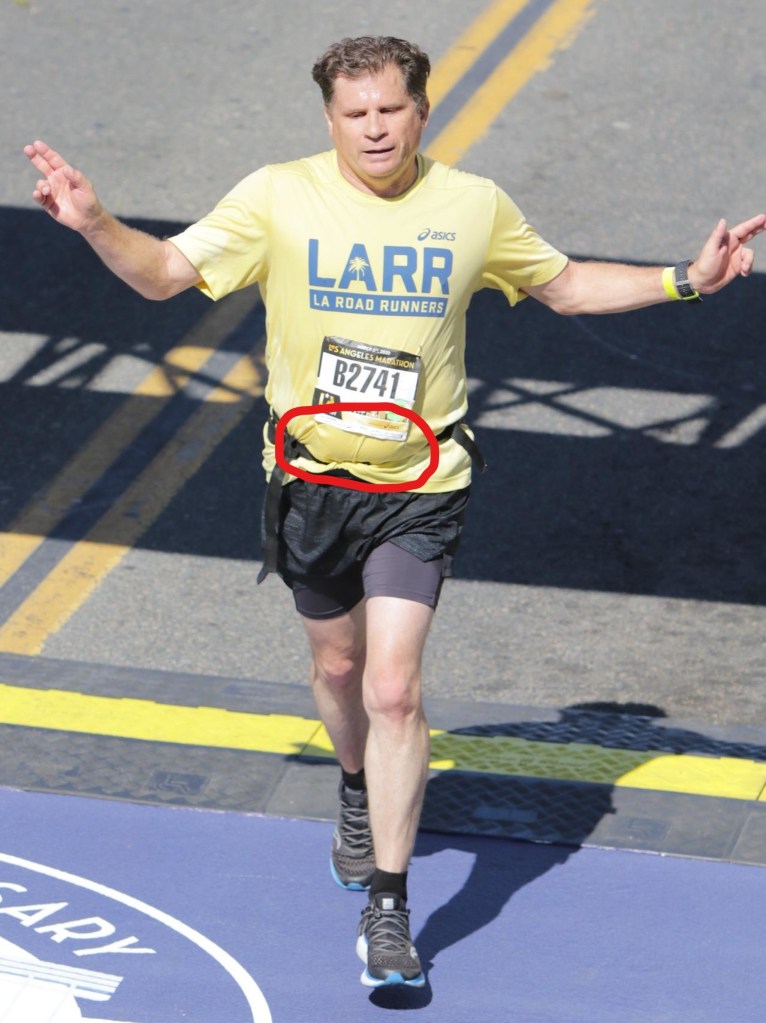
Weight loss. Look at the picture below. There is no reason why at five feet eight inches in height I should weigh 180 pounds. How do I fix this? I tracked everything I ate each day for a week, with no analysis and no judgment. At the end of the week I counted the calories. I was consistently 400 or more calories over what I thought I was consuming, nearly every day.

With that knowledge, I created a plan. I allowed myself to consume 2,000 calories per day. Oatmeal, eggs and a banana were around 500. Lunch would be another 500, same with dinner. The remaining 500 calories were split into two snacks, taken mid morning and mid afternoon. I stopped eating after 6:00 PM.

I surprised myself a couple of days by subsisting on 1,800 calories. Occasionally 2,200. But most days? 2,000 right on the spot. I began to notice a subtle shift in my relationship to food. Eating was no longer a mindless task I did several times a day, it became a way of fueling my body to function at its best. Where am I now? It didn’t take long to lose an “easy eight.” My current daily weigh in bounces around between 173 and 175 pounds. Since my goal is 165, a weight I have no doubt will ultimately be more healthy for me, I need to tweak my project somewhat, including a reduction in calories down to about 1,800 while eating foods that leave me sated and properly fueled, while at the same time taking on the one thing I’ve been waiting for the ability to do since my injuries have largely healed: Run.

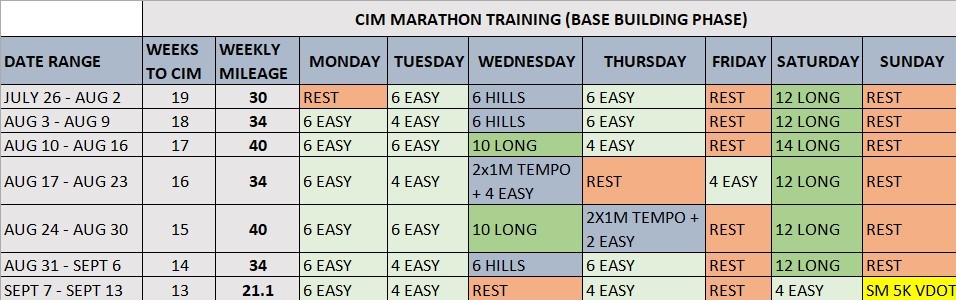
And run I have. After the injury healed I worked running back into my life, primarily by running easy on trails out in the back country I mentioned above. I’ll dig into those in my next post, “The Runs of Summer.” But I’ll leave off today with my current base building schedule, which I am following to prepare me for quality training for a marathon that I can pretty much guarantee is not going to happen: The California International Marathon in Sacramento in December. I’d love it to happen, but I’m not sure if I’m ready to expose my sweating, heaving face (with lungs attached) to dozens of other faces at multiple water stops and a finish line. The thought of all those microbial clouds exchanging billions of tiny little micron-sized droplets bearing a certain SARS variant virus which WILL KILL US ALL (or at least make life profoundly unpleasant if one is lucky) gives me the shivers. And if I’m not careful, it could give me the shakes, the gasps, and the regrets as well. It’s better to be patient than wish one had waited for a few measly months (or years) because after a lung infection, running may no longer be possible at all.

Ever.

2019 California International Marathon Race Report

Better Late Than Never!!

First of all, the California International Marathon race course is much prettier than I thought it would be. The only reference I has was a course review on Youtube which led me to believe that I would be running through suburban drudgery. Far from it. The little towns we ran through, from Folsom, into Carmichael, and into downtown Sacramento itself have unique characters. While there certainly were strip malls and bland, suburban tract housing, elements of the frontier west and the Gold Rush made it easy to forget all that.

And the layout of the course itself, with long, straight lines for miles (seemingly) without end and very few turns enabled me to get lost in my run, relax and enjoy the scenery.

And now, for the race!

The starting gun went off while I was still in the Port-a-Potty, so I crossed the start line about five minutes later than I thought I would. I caught one of the 4:00 pace teams, however, and I figured that I would run with them for a few miles to warm up, then slowly run ahead at 8:45 pace to match my goal time.

Within moments, I knew it wasn’t going to be the plan.

The California International Marathon is a net downhill race, but the downhill is almost not noticeable: a 350 foot drop over 26.2 miles. In round numbers, about a three tenths of one percent drop. What there were, however, were lots and lots of hills, starting with the first mile. Small hills, to be sure, and in the back of my mind I knew they would be there. But they still took me by surprise, so much so that I dialed my pace down again, allowing the 4:10 pace team to catch up with me and then running with them for the majority of the race.

But as it always does, the training I came to the race with eventually kicked in, and I settled in to just under a 9:30 per mile pace, my first priority to simply get through the race standing up. I helped myself feel better by engaging in conversations with people around me, including a young man running his first marathon (who I gave several helpful bits of training advice), and amusingly, a high school girl who, responding to my “thanks for coming out!” to her group of friends, yelled “I’ve gotta give that guy a high five!” High five’s exchanged, I marveled at how light our burdens can be made to feel if we allow others to share them with us.

We ran in perfect weather. Not as cold as I was told to expect. The skies threatened rain, but all I felt was a refreshingly cool and moist breeze that left me dripping but energized despite the fact that I was struggling more than I expected to.
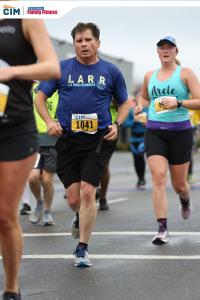
Mile 12 and dripping wet

Hanging tough at mile 12

For example: at about mile 15, my Morton’s Neuroma kicked in. and at that point it was going to be a race of attrition. Who’s going to win this battle, the race course, or me? Here’s how my internal dialogue went:

“One mile at a time, kid, one mile at a time.”

“But it’s mile 16!” I shot back to myself. “There’s ten miles to go, my ‘A’ goal is in the rear view mirror, gasping for breath and looking for an ambulance, and everything just friggin’ hurts!”

“Well, of course!” I replied to myself. “This is how mile 16 is supposed to feel like.”

“It’s only mile seventeen, now!” I countered a few minutes later.

“Sure is. And you made it, too, didn’t you? Does it hurt any worse?”

“Can’t tell for sure,” I replied.

“There you go. And look, we just passed the 30k checkpoint! You’re killing it!”

“Well, I guess I feel ok,” I admitted through gritted teeth, “but things are slowly getting worse, by tiny degrees, and I’m slowing down just a bit, too.”

“Then pick it up a bit! The shock to the system will do you good. And look, there’s that “wall” display with the Rocky theme music playing at mile 20! Run through it and go ‘Woooo!’”

“I’m not yelling “Woooo!”

“Suit yourself.”

Long story short, I could feel myself slowing down as the race went on into the latter stages. My 9:25 had turned into a 9:40, even though by mile 21 there weren’t any hills left, and the lack of them gave the illusion that the rest of the way ahead was a screaming downhill (an optical illusion; the course is pretty much pancake flat from that point). But I had pushed through mile 20. Miles 21 and 22 were history, and though my foot was in screaming pain, I was persevering. No 3:50, no sub 4, but the dance party at the H Street Bridge was pretty damn inspiring, and I was killing it before it was killing me with less than 5k to go.

Then the Katzenjammer Twins, known as full body fatigue and, shall we politely say, gastric rumblings, strolled onto the scene and I lurched clumsily into a very undignified stagger.

Recalling an earlier lecture in race walking, I alternated between pumping my arms while striding like a madman and running, all while looking for the closest latrine available. Luckily there were none, because if I had found one and stopped, I doubt I would have been able to start again. So I put my head down and gutted it out, the fight now down to my pain vs. How much longer did I really want to be out here.

At mile 25 the finish line festival was a dull roar, which got louder as we drew closer to the Capitol building. The last half mile was spent dodging pedestrians and staggering finishers making their way back to the hotels. Then that grand U turn onto the Capitol grounds and the finish line, perfectly framing the imposing structure just a hundred yards ahead. If I wasn’t suffering so badly, I would have appreciated it more. But I was suffering. Badly.
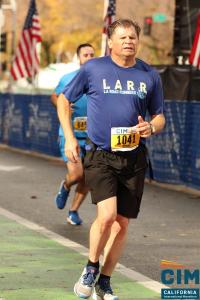
Suffering badly

Suffering. Badly.

I finished in 4:19 and change. Nowhere near my goal, but grateful to have survived. Drank some of that awesome hot chicken soup at the finish line festival, located the drop bag zone and tried to sip the chocolate milk waiting inside my drop bag while staggering around looking for an exit out onto the street and back to the hotel.

Found one, made my way to the hotel, showered, got dressed, Netflixed and chilled, grateful for a friend and fellow CIM-er who used his hotel points to get me an extended checkout (thanks again, Russ!). Oh, and didn’t cry.
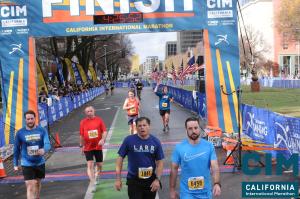
Finish Line

Finally

A few hours later, my brother Bob, who is commuting weekly from Gilbert, AZ to Sacramento for work, joined me for a post marathon meal at Squeeze Burger a few blocks from the motel, an unexpected, and grateful, surprise.
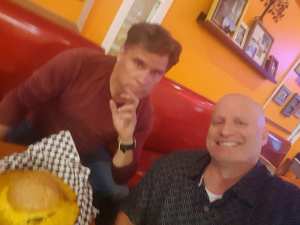
Me and Bob

Brothers hanging out!

So: what went right, and what went wrong:

RIGHT:

My mileage increase. My number one weakness isn’t a lack of speed or even strength: it’s time on feet. I increased my mileage to 40+ miles per week for three weeks in a row, including a 45 mile week just a few weeks before the race.

Hill training. I greatly increased my hill training for this cycle, which helped me run as well as I did. Without it, I’d probably still be out there. Included was an 18 miler consisting of three hilly loops with about 400 feet of elevation gain per loop (what the locals here in LA call the Amalfi Loop).

WRONG:

Despite all the hill training and increase in overall distance, I was not prepared for a relatively flat course with rolling hills. As race day recedes into memory, I’m starting to realize that most of my troubles were mental. I had never run the course before, and despite my preparations and overall marathon experience, I was not prepared for all the rolling hills that particular course.

The other part is that it simply takes time for increases in training volume to make their way to the cellular level. I have no doubt that as I keep up the efforts I started back in the fall, and gradually increase my overall volume to fifty, and hopefully by my next PR attempt, 60 miles in a week, something inside will kick in, and I will see monstrous improvements.

And besides that, my ability to run through the pain and discomfort I encountered out there really surprised me. Something about those extra miles, hill training and tempo work manifested itself that day and helped me finish strong on a day when I wasn’t sure I’d even finish.

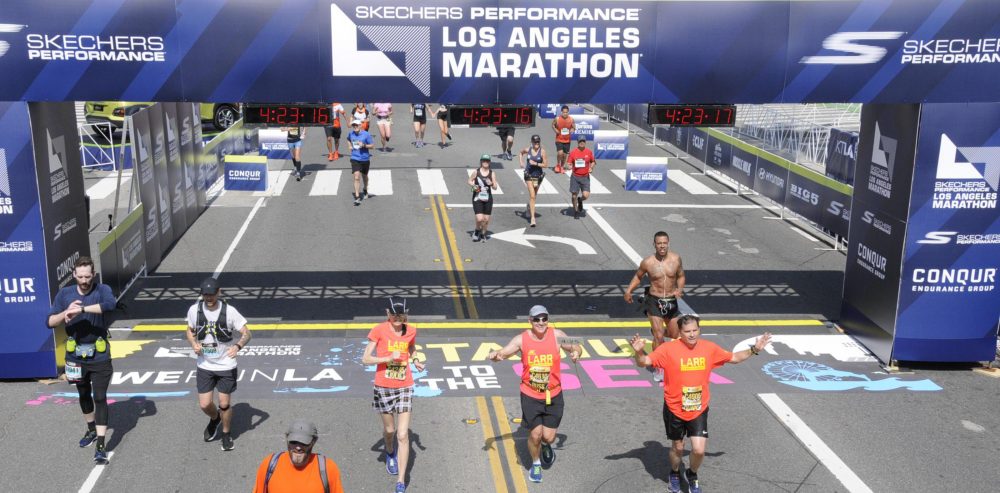
Next up: Pacing runners in the LA Marathon to a 4:22 finish as a Pace Leader for the LA Roadrunners in March, a brief recovery, then an all out assault at the Mountains 2 Beach Marathon on Memorial Day weekend.

And has the California International Marathon seen the last of me? Hell no. I want revenge, and I’m going to get it!
My Little Heart Buddy

I’m not old. Really, I’m not. When I was in high school, I perceived that adults just a few decades older than me were old and out of touch. But that couldn’t possibly apply to me.

Right?

Here I am, a “man of a certain age,” if you will, two decades older than most of the adults I knew when I was in high school. At an age of such a towering height that I never thought I’d actually get there back in my sepia toned youth.

Life moves along like a mighty river, doesn’t it?

There comes a point where, after you’ve owned that shiny new car for long enough that the paint begins to fade a bit and the new car smell is a distant memory, that a little red light appears in a previously unnoticed corner of the dashboard where the speedometer lives. It’s called the Check Engine light, and the message behind the persistent little reminder carries a cryptic message. The message is this:

“THE FUTURE IS NOW, M—–F—–!”

There was a brief moment of about eight years duration when I thought I would live forever. Looked about the same, felt about the same, had about the same amount of energy, but over time, little changes made their way through the spiraling DNA that encodes me. I didn’t notice it until one day I realized that I couldn’t read small print on the page. Time to grab a pair of +1.5’s from CVS and accept the fact that I’m my grandmother now. Yikes!

Marathon running has chased back a great deal of the entropy that will eventually encase us all in its comforting coffin, but every once in a while, something slips through. In my case, it was heart palpitations.

Mostly harmless, my primary care physician told me. No doubt your run of the mill stress brought on by the usual suspects: job, city living, social concerns, concerns about the future. Terms like diet modification, self care and meditation were thrown around.

After informing my physician of my family’s history of heart ailments (father and grandfather both passing away from failure of that vital organ), he prescribed a series of tests designed to ferret out how my body is holding up, since I am pretty much halfway and change between birth and the heat death of the Universe.

One of these tests is called a “Holter Monitor,” and it looks exactly like this:

BioTel Patch

The monitor is a chip approximately the size of a USB drive. It is attached to the chest by plugging it into a cartridge which itself is attached to a plastic adhesive patch. Once on the chest, it monitors your heart beats over a two week period. Once the two weeks are up, I will mail the monitor to a processing facility that will download the data and send it along to a cardiologist, who will then forward any findings to my primary care physician.

And I get to wear this thing for two weeks! Yay!

Luckily, since I am in the final training cycle for the California International Marathon, I can wear it while running.

“Of course,” the technician said as he demonstrated how to attach it to my chest, “you can’t really wear this while running.”

“The hell I can’t,” I replied as courteously as I could manage through gritted teeth, “the literature tells me, right here,” (animated gesticulating at the small pamphlet opened on the examination table) “that I can exercise, and even shower with this damn thing glued onto my left pectoral. Of course I’m going to run with it on!”

“How much are you planning on running?” He asked.

I almost told him the truth, which was about eighty miles over the next 14 days. Instead, I said “I’m training for a marathon, so there will be some serious jogging.”

I expected a counter argument, but instead, he congratulated me on my dedication to exercise, and grabbed a handful of extra patches for me to use in case it fell off during my run.

The monitor was attached on a Monday a few weeks back. On Tuesday, I ran six miles at my 8:45 marathon pace with no ill effects, either to me or to the patch.

The next day, Wednesday’s track workout, was the acid test. On tap: after a mile warm up, four one-mile tempo runs at my hard tempo pace of 7:45 per mile. And it was a warm day. I started the workout, tentatively poking at the patch to make sure it was still attached as sweat poured down the front of my shirt.

Midway through my last mile, I felt the patch unglue itself from my chest and fall through my shirt.

I finished the run, carrying the patch in my hand, and drove home. A six mile hill run and a long hilly 12 miler was on my schedule for that week, along with various recovery runs, and I had to figure something out.

After reviewing the directions for applying the patch, I saw the error: the technician did not scrub my chest with soap, rinse it off and let it dry, or shave any hair in the area where the patch was supposed to stick. He did, however, scrub the skin with the included skin pad, but not for the recommended sixty seconds to remove any dead skin.

In his defense, we barely knew each other.

I took one of the replacement pads and after attaching the chip and following all the instructions to the letter, reapplied the chip to the chest site. The monitor stayed where it was applied for the remainder of the week’s runs. However, due to my physical activity, regular removal, skin preparation, and reapplying of the patch was necessary. Applying strips of sweat resistant bandage tape to the sides of the patch helped with my peace of mind, and I’m going to finish the two week period with two patches to spare.

I just wonder what the cardiologist is going to think when she sees my heart rate running all over the place. I guess I’ll find out.

RACE REPORT: IronMan Tempe 70.3 Relay — October 20, 2019

(Yeah, I’m a bit behind in posting some of these entries. Not sure why; the next marathon I’m training for, the California International Marathon in Sacramento, takes place in less than two weeks, and I have a slew of entries written but not yet posted about my preparation and where I stand vis a vis PR-ing. I could blame myself and whatever personal issue I’m having with this whole BQ fascinationfor the delay, or I could shift the burden to something outside myself, say, Hillary’s emails. Sure, that.)

I sat in the shade of an administration building near Tempe Town Lake with my high school friend Neal, watching the relentless sun, unfiltered by so much as a thin haze, let alone a cloud, climb higher in the sky. Neal was the one who convinced Richard, another friend from those sepia toned high school days, and me, to share in the Iron Man experience, something he had taken up years before. My facebook posts were largely running related, and Richard shared his experiences battling wildlife, inattentive drivers, and fellow cyclists on the roads and bike paths of Phoenix’s East Valley. Clubbing our various middle aged physical talents into a single grand event was the natural thing to do.

Sunday morning was cool and pleasant as Richard and I walked back to the Transition Zone to wait for Neal to complete the swim leg. Richard would be next on the bike, and he instructed me in the basics of his camera so I could take photos of him during his leg. Used to a simple point and shoot, I struggled with Richard’s larger and more complex camera, completely missing him on the first two of the three laps of the bike course, and catching perhaps a blurry shot or two of him finally on the third and final lap (Richard is a professional photographer). In the meantime, the sun transformed itself from an ochre toned source of gorgeous morning light to an unfiltered beacon of radioactive death. The temperature had climbed from a pleasant sixty degrees to a PR killing eighty, and inwardly I worried if I would be able to run my half marathon leg in under two hours, which had been my fallback goal if I couldn’t make 1:50 or better.

Richard biked into the transition zone, unstrapped the timing chip from his calf and handed it off to me. I strapped it around my own leg and ran through the zone and onto the run course. The course was a series of out-and-backs along Tempe Town Lake, starting with a two mile run to the first turnaround, a two mile run back, then a slightly shorter run the opposite direction and across a pedestrian bridge, then back to the start. Returning to the start marked one loop. After the second loop, runners were directed through a long finishing chute that circled around to the finish line.

The first half mile was easy. Shaded by tall buildings, I ran along a series of concrete paths that were just hilly enough to keep me from getting cocky and burning energy too quickly. Then the path dumped me onto a packed dirt trail, directly into the view of the burning sun. Oh, boy.

Non runners might not fully understand, but heat, even as benign as a pleasant 80 degree day, is very difficult to run in, especially under full sun. One might perspire a bit while undertaking a pleasant stroll in such conditions, and even an easy jog is doable, as long as you know your limits and know when to turn around for some shade and a cold refreshment or two. But actual racing is a different beast. However, the bigwigs at IronMan Corp arranged for aid stations at every mile along the course, and I took full advantage of each one:

One swig of water (each odd numbered mile)

One swig of Gatorade (each even numbered mile)

One additional cup of water to dump over my head and down the back of my shirt (every mile), and

One cup of ice in the cap of my running hat, replenished continuously as the previous ice melted away.

An additional adjustment: negative splitting the race. The first lap was all about maintaining a respectable race pace while letting the idea of setting a PR go. For me, that meant maintaining a relatively slow 9:15 per mile pace, just 15 seconds per mile faster than my normal easy pace. In the heat, however, it felt more like 8:00 per mile on a bad day, but I could sustain it and see how I felt at the end of that first lap. I ran past Neal and Richard as they relaxed under the shade of Mill Avenue Bridge. I managed to mug a bit for Richard’s camera, but even his considerable photographic expertise could not hide how I truly felt.

I ran to the pedestrian bridge, hit the turnaround, and doubled back toward the starting line, where a sign directed finishers to the chute on the right, and those of us who had another hour or so of misery to continue on the left. It was at this point where I’d planned to hit the gas and negative split the run. Mile 6.55, the halfway point of the half marathon, showed I had two minutes to make up to finish in under an hour. Unfortunately, it was past noon by this point and the day had just gotten hotter.

“Just gut it out!” I told myself. “You’ve got to finish at some point, whether you ‘run, walk or crawl,’(*)” I took a deep breath and just did my best to enjoy the moment. I was running an IronMan relay with friends, enjoying the day, testing my limits, taking a measure of how my training for the California International Marathon was coming along. Carpe Diem! You only live once!

I did my best to “embrace the suck,” as they say. I was also trying as hard as I could to ignore the Morton’s Neuroma, a pinched nerve that throbbed between the third and fourth toes of my left foot like a misfiring spark plug. Embrace the suck, indeed.

With three miles to go, I decided to hit the gas for real. After all, other athletes who were either finishing or waiting for others to finish were milling about, and now was not the time to look like I was suffering. To finish under two hours meant that I had to increase my overall pace from 9:17 per mile to under 9:07, and I had very little time, which meant that I had to run the last three miles at 8:30 or better. Fortunately, my fuel, hydration and cooling strategy gave me the oomph I needed to make it work, and after I hit the last turnaround, I went for broke. Damn the torpedoes! Full steam ahead!

I ran the final mile in 8:15, and with an immeasurable amount of relief, I turned right at the sign towards the finishing chute and ran the final tenth of a mile in a heat induced haze of dizziness and euphoria. “And we have a relay finisher crossing the finish line, Duane… Waiyott– Wait-e? Waite?” No one gets my last name right the first time they read it, damn them.

Didn’t matter. It was a wonderful experience, and I crossed the finish line under two hours, with just seconds to spare. 1:59 and change. I’ll have to look it up and get the exact time. But I did it.

Here’s to Carpe Diem, seizing that day, embracing the suck, and living life to the fullest, and sharing the experience with good friends.

Quick Addendum: Staying out of that “grey zone”

One thing I need watch out for, and how:

The Grey Zone.

Run your easy runs slow, and your other runs fast, goes the mantra.

So why, on my eight mile supposedly easy run yesterday, did I jump in pace from 9:45 (my designated easy pace) to 8:30 and a touch faster for the last three miles? Chased by adoring fans (whoever you are) or a knife wielding dervish looking to bring on the Apocalypse?

Nope, just:

Having a good time (like most people, running is stress relief)

An unexpected burst of energy from improved fitness (see previous post for my base training successes)

Wanting to see where I’m “at” right now.

What did I get in return? Other than the warm glow of satisfaction, I walked around today with sore knees. May have had something to do with the brand new Saucony’s, the soles of which are hard as a board when they are brand new, maybe not. All I know is, a 45 minute marathon race pace run that was supposed to happen today didn’t because I didn’t want to risk further injury. The knees are feeling better now, but I’m going to have to run five EASY miles tomorrow on my designated recovery day, followed by my scheduled 18 miles on Saturday. I’ll do it, but I’d have preferred to rest tomorrow instead of today.

Lesson learned: follow the schedule. The running brain on paper. Save the long surges for when I need them!

End communication.


Everything I learned during my base building phase in one word

Consistency.

Long story short, I followed the plan I posted above (well, 85% of it, anyway), including hills, long runs, speed work, and a bit of time off to let the body and mind rest.

Then I put myself through a two week build phase for my VDOT test, the Santa Monica Classic 5k. Ran the Santa Monica Classic 5k, which is a point to point course with approximately two miles of gentle uphill. Finished in 23:25, good enough for 5th place in my age group, and 101st place overall out of 1,500 or so runners. Not sure why I’m throwing those stats in there; most likely a salve to my ego that four years ago I ran the exact same race with the exact same course about 40 seconds faster. But it was a good enough result to tell me that my base building had not been in vain, and that with proper training I can gain all that speed back, and then some.

VDOT: 41. Does that number sound familiar? It should, because it’s the exact same VDOT I started this blog with. But that’s okay (I tell myself, reminding myself to breathe). Positive changes take a bit of time to percolate through the system. And in the meantime, here is what I gained through the base building phase, and where I am now a month into my quality training phase with 10 weeks to go until the California International Marathon in Sacramento on December 8, 2019:

Consistency. Yep, that word again. Consistently following a training plan for a period of time is more valuable than a series of sporadic fits and starts, even if those little run bursts are impressive in their own right. I have a schedule, drawn up by David Levine (of The Idiot’s Guide to Marathon Running fame). That schedule is my running brain. I run what it says, with very little, if any, variation. A VDOT of 41 equates to roughly an 8:30-8:45 marathon pace, which would cut in half the distance between my PR at Mountains 2 Beach and 3:30, my BQ PR minus five full minutes. Consistency in training at a pace congruent to my current ability is 90% of what I need to do to hit my goal.

Flexibility. Fell off the wagon a bit here. Was doing specific stretching for several weeks in a row when when most those niggling running pains disappeared into memory. Slacked off a bit, and wouldn’t you know it? They came roaring back like a bad habit.

Excess weight: I have ten pounds I can easily lose without trying, without doing more than making a few minor adjustments over the next two months. I’m 5’8″, a bit “thick” (i.e., not whipcord thin), and carry a little bit around the waist I don’t need. No gut to speak of, but I feel it around my torso like a weight belt. I can lose it, easy. Dropping from 180 to 170 pounds will give me more energy and running strength in those last few miles than I can imagine right now.

My “why.” That’s the biggest gain. I know exactly why I want to do this. I know I have it in me to run at least 3:30 in the marathon, which is a five minute cushion of my actual 3:35 Boston qualifying time. I know of too many people who have reached similar goals and crashed through them to think of myself as the lone guy who somehow, for genetic or other reasons, couldn’t pull it off. My ego isn’t that big. All I need to do is put in the work: lots of long, slow mileage to build fitness at the cellular level and increase stamina, most of it during the week on short (4-6 miles) and medium length (7-10) runs, with a long run every weekend. Tempo runs at 30 seconds per mile faster than marathon race pace. Some repetitions to increase turnover. The right foods. Flexibility and rest. And sleep, blessed sleep. Nine hours of it each and every night.

I’m a month into quality training now. Starting Monday, October 7th, I’m going to post my weekly workout, and follow up on how it felt, and how well I did. Flexibility, diet, weight management, it’s all going to be in there. I’ll try to keep it entertaining, but I’m not going to pretend that this blog is going to make history, or even inspire someone who reads it to push through their own personal walls. I’m writing this blog to hold myself accountable. To prove to myself that I can do it. Because I can.

So there.

“You wanted to find out”

Junk food: Eaten!

10 pounds: Gained!

Aerobic Capacity: Lowered!

Leg muscles: Slack!

Motivation: Seriously?

Running break: Accomplished!

Urge to train: …Rising? Maybe?

It’s one of the risks you take when you deliberately take time off from training and allow your body and mind to recover. And it’s not like I was completely lazy. I ran most Saturdays, but easily and socially. I hiked, did a bit of trail running, and even attempted a bit of speedwork.

A total of 55 miles run for the month, more than most non-runners would consider running for a year.

But just like how one looks around while on a two week vacation and says “This is my life now,” completely forgetting about all the real life stuff waiting patiently at home, I fell into the trap of “yep, my running is going just fine!”

And it is, if all I’m I’m trying to get out of running is a weekly social leg stretch and the occasional quick hike down a trail. But I didn’t create this blog with that motivation in mind.

I’m 56 years old, in great health, and I want to know how long and fast I can go with the right kind of dedication and training. Can I qualify for Boston, and perhaps run even faster?

Most importantly, I want to know if I have the fortitude, discipline, and love of the sport to buckle down and do the training in the first place.

And not just the training, but every part of my life connected to the physical effort:

Can I cut the crap out of my diet so I can lose the ten pounds I gained, and then lose 10 more?

Can I spend those hours at home after a hard day at work more efficiently so I can get to bed on time for 8-9 hours of sleep each and every night?

Can I write out a schedule that includes a long morning run, then get up when the alarm tells me to so I can get it done?

Can I commit to a daily flexibility program without it turning into a STAR TREK episode binge watch with token hamstring stretches during the commercial breaks?

Can I practice the self care I need to make sure that my training doesn’t negatively impact my personal relationships, job, and other goals that are just as important as training for a marathon time goal?

And can I maintain these adjustments to attitude and habit long enough to either reach my running goals or come to the conclusion that I simply don’t want it enough?

Nothing wrong with being a recreational runner. Millions of people are. Is that what I truly want?

THAT is my “why.”

THAT is what I want to find out.

Listen to Frank Shorter ask Meb Keflezighi about the strategy he used to win the Boston Marathon in 2014. Listen to Meb’s answer and Frank’s response. That is the essence of the question I am asking myself.

https://www.youtube.com/watch?v=CVjt5yBte4o&t=0m41s

The California International Marathon is five months hence, to the day. I created a base building training schedule for July and August designed to get me ready for the three months of quality training necessary to get me to the start line on Sunday, December 8th, 2019 with a reasonable shot of hitting a specific time. With the exception of four miles of repetitions and intervals, it is all easy running. Part of me thinks I’m being a bit too easy on myself with this schedule, but it is designed specifically to leave me with no excuses. Is a marathon time goal something I want, or not?

Long before I reach the end of this schedule, I’ll have my answer.

Mountains 2 Beach Race Report: Black Clouds and Silver Linings

Did I run this marathon in my “A” goal time of three hours and fifty minutes or less? Did I break four hours, a “B” goal booby prize I’ve been striving for ever since I toed the line in March of 2013 for my first ever marathon? No, and no again.

But I PR’d by seven whole minutes, and therein lies a tale.

The goal back in March, after successfully pacing 4:22:00 at the LA Marathon, was to continue the plan I had first concocted at the beginning of 2019: train to run LA at 8:45 pace, for an approximate 3:50:00 time. As you recall, the idea was to train specifically for LA at a pace a half an hour faster than the time I would be expected to finish so that I could run the expected pace comfortably enough to help the runners who depended on me to get them over the finish line at the time they had trained for. It worked. This year’s LA Marathon was the easiest marathon I’d ever run, and it showed in my ability to “be there” for my struggling pacees.

And after two weeks rest, I directed my focus to Mountains 2 Beach, six weeks away. I increased my speed work and ran more hills: Santa Monica to Inspiration Point in Will Rogers State Park (twice), three sets of what we call “Amalfi Loops” which are runs up and into the hills of Brentwood, back over to San Vicente Blvd at the Santa Monica / LA border and back down. Six miles each.  At least two loops for each set. Over a thousand feet of elevation gain and loss each week. Long, hard tempo runs every Wednesday along the Santa Monica beach path, from the Pier to the boat house and back. Seven miles round trip, nine if you count the warm ups and cool downs. Half the distance at my true tempo pace (8:00 per mile), then back at slightly faster than my predicted 8:45 marathon pace for Mountains 2 Beach. Oddly enough, I would look down at my watch, particularly during the last two weeks before the marathon, and notice that my 8:00 miles had turned into 7:45’s. Definitely getting fitter, faster.

Bring it on!

My weekly mileage took a bit of a hit, however, as a result of all this speed and strength training. Didn’t run a 50 mile week once between LA and M2B, even though I easily hit that goal three weeks before LA. The hills and speed work took it out of me. But could I have done so, had I forced myself to? Undoubtedly.

And that’s the key word right there. Doubt.

I felt fresh and prepared early Sunday morning, the day of the Mountains 2 Beach marathon. I spent the previous afternoon lounging in my motel room fueling, hydrating and Netflixing. Slept well. Boarded the shuttle, made it to the start in downtown Ojai in time for multiple Port-a-potty visits, and lined up at the start, raring to go.

Then I thought about the first three miles of the race, the fact that after the relatively flat, easy mile, two more with a nontrivial uphill grade awaited. That set my rumination cycle in motion: I’m running at 8:45 pace. If I slow down 30-45 seconds per mile for the first few miles to warm up and preserve my precious carbohydrate stash and leg strength, will I still be going out too fast? After all, I didn’t run faster than about 9:45-10:00 miles up all those hills while training. Would 9:15 on those two uphill miles set me up for trouble at mile 20?

In response, I made the decision to run with the 4:00:00 pacers for the first portion of the marathon to tamp the intensity down, then speed up in time for the big drops at miles 8-14, and coast to an easy 3:50-3:55 to the finish. Big mistake. Because by the time I felt ready to run ahead, the 4:00:00 pace was already locked into my legs.

However, the pacer knew we all wanted to run under four hours, so she helped us out, easing us forward to the point where we were two minutes faster than 4:00:00 by about mile 22 or so. I was hurting by that point (as everyone was, including the pacer), but when we turned the corner onto Thompson Drive in downtown Ventura, a tiny little molehill at mile 24 loomed too large, and despite my internal urgings that the time was NOW to break that four hour threshold, despite the fact that I had run conservatively and consistently, and that mile 23 was my fourth fastest mile in the race (8:52), I hit the brakes and slowed to a fast walk. If you look at my TomTom pace graph, you can see where I willed myself to the finish line with a combination of staggering, race walking, swearing loudly (to the point where I’m sure people thought I was nutzo) and running. I consoled myself that a PR is as good as any “A” goal I could possibly set for myself, and I willed myself over that finish line.

4:03:48.

M2B 2019 PACE GRAPH

******

Looking back on what I’ve just written, I realize that it reads like a confession wrung out of a suspect under hot lights. But the fact of the matter is I PR’d by seven whole minutes! And I accomplished that because I trained for it! That’s saying something. This propensity I have to minimize my own accomplishments because of a failure to cross over a preconceived threshold is genetic in nature, I suppose, but it’s something I absolutely have to come to grips with and get past.

Because now that we are through the LA and Mountains 2 Beach cycle, I can take a deep breath, recover, recoup some strength, and set my sights on a big goal. Big. Just you wait and see kinda big. Huge. Yuuuuuge.

The secret is specificity in training: Long runs with sections where I run marathon pace or slightly faster, especially near the end of the run. More familiarity with the uncomfortable tempo training pace. Hills. Recovery. Dropping about ten pounds or so. And a whole hell of a lot of base building, which has always been something I’ve struggled with.

Will this new goal be arbitrary? Probably. Is it realistic and achievable? Most definitely. Will I have this same conversation with myself if I somehow fall short? Hey, you know me.

You’ll hear all about it on the next exciting episode, so don’t even worry about it. (That last phrase was meant for me).